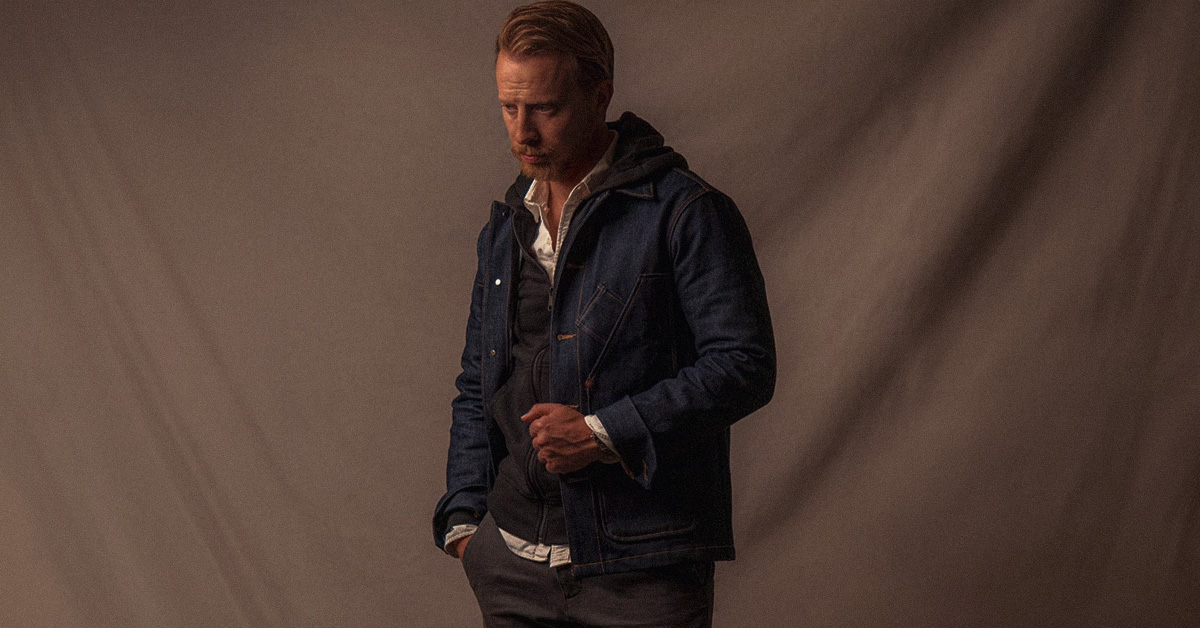
The perfect lightweight jacket for modern life.
What exactly is a chore coat? First and foremost, the name is your biggest clue. Popular during the first half of the 1900s, the lightweight chore coat was born out of France and exclusively made to protect laborers and artists by creating a tough barrier on top of clothing, typically work overalls.
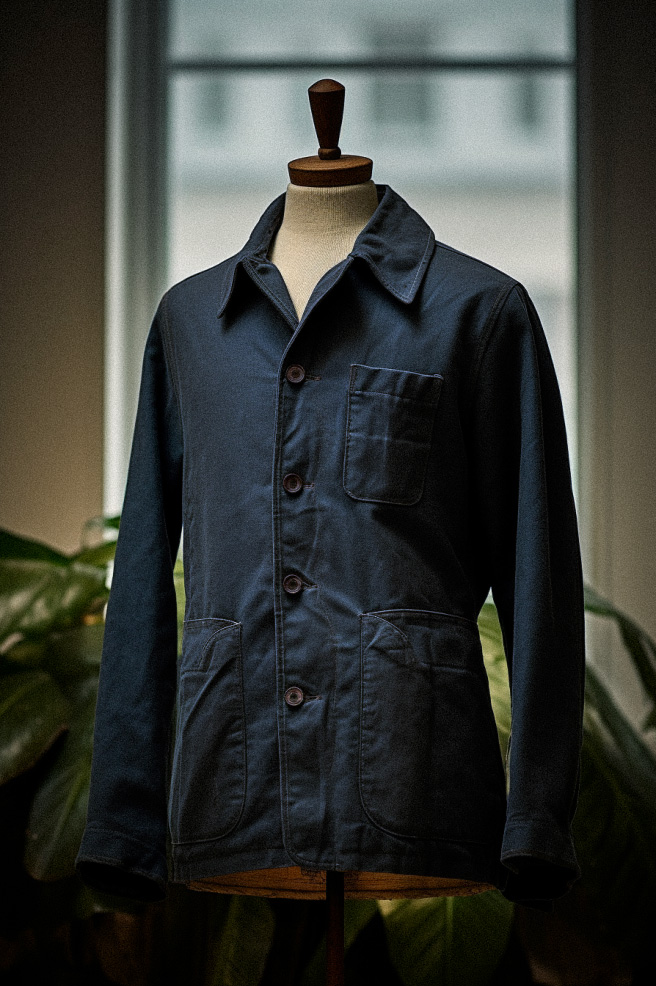
Chore coats featured oversized pockets (at least one spacious chest pocket and even larger hip pockets) for the tools of their respective trades, and they were generously cut so as not to impede movement. Materials typically included cotton canvas or thick cotton twill fabric in a blue hue with large buttons rather than zippers, which required more dexterity and focus to operate. The fabric could be cut and sewn together quickly since drape and fit weren’t exactly priorities.
One of its most iconic iterations is the French “bleu de travail,” literally translating to “work blue.” Originating in the late 19th and early 20th centuries during France’s period of rapid industrialization, this classic French work jacket was initially a staple among agricultural and industrial workers. Crafted from durable cotton twill or moleskin, its blue color was practical for disguising stains and dirt that came with a hard day’s work. The garment gained popularity for its durability, comfort, and cost-effectiveness, becoming emblematic of the working class in France. Over time, the bleu de travail transcended its utilitarian origins to become a symbol of French working-class culture and has even found its way into contemporary fashion. Yet, at its core, the bleu de travail remains a tribute to the labor and craftsmanship that it was originally designed to serve.
When the chore coat came to the States in 1923, it expanded beyond the blue French workwear coloring for more neutral tan, brown tones, and was crafted for the American railroad worker. In fact, the iconic striped “train” coat you’ve seen in old movies and period pieces is a chore coat in a uniquely American fabric known as wabash.

Carhartt was the first one that took a stab at creating an icon and went ahead and crafted one with copper rivets and triple stitching for strength. A flannel lining was later added for warmth, a necessity in the colder climes and work environments.
The chore coat was also popularized in post-WWII Japan largely because the prevalence of American military garb eventually led to the westernization of men’s style. The button-up shirt and blue blazer were eventually replaced by the chore coat in the ‘70s, and its most prominent iteration is the denim version that’s a staple today.
In recent years, the bleu de travail has also gained a following among painters, artists, and other craftspeople, who value its functional design and pockets for conveniently holding tools and materials.
Some might confuse the chore coat with the field jacket, which we’ve covered extensively, and that’s understandable since both are casual and practical while imparting a rugged style. The chore coat is traditionally unlined and wasn’t meant to act as a layer of insulation but rather a light protective layer, while field jackets may be unlined or lined.
Original field jackets were military-spec, and they were not as baggy as chore coats and typically had a standing collar and flap pockets with snap closures, while chore coats could employ notch-lapel or point collars and had large open patch pocket. Occasionally, a chest flap pocket was used. Modern interpretations of the chore coat run the gamut of materials and still use traditional denim, waxed cotton, canvas, and even boiled wool. The versions are myriad, and you’ll also see chore coats called “engineer coats”, which is another very similar permutation. The chore coat was never meant as a fashion statement, but like the venerable work boot, it’s evolved into a key member of workwear style that’s prevalent today.

They also tend to be cut slimmer today, though boxier versions are still popular. The key is to find the cut and material that works for you. If you’re on the job as a contractor, factory worker, tradesman or artist, go for the roomier cut. If it’s hitting the pub on a crisp day, opt for a narrower cut for a more put-together style pallet. And rather than scour the web for the best choices, we’ve assembled 11 of the best chore coats to suit your look or your occupation.
How to Wear a Chore Coat

Unlocking the potential of the chore coat in a contemporary setting is less about rigid fashion rules and more about embracing its innate versatility. As a modern guy, you’re constantly juggling different roles—be it the casual weekend warrior, the nine-to-five professional, or the spontaneous adventurer. The chore coat seamlessly fits into all these scenarios, serving as a sartorial Swiss Army knife in your wardrobe. Whether layered over a crisp dress shirt for a smart casual office environment or thrown over a tee for a laid-back vibe, this jack-of-all-trades outerwear piece effortlessly elevates any outfit. It’s a style buy that pays dividends in adaptability and ease.
As an outer layer on a sweater and t-shirt






Leave a Reply