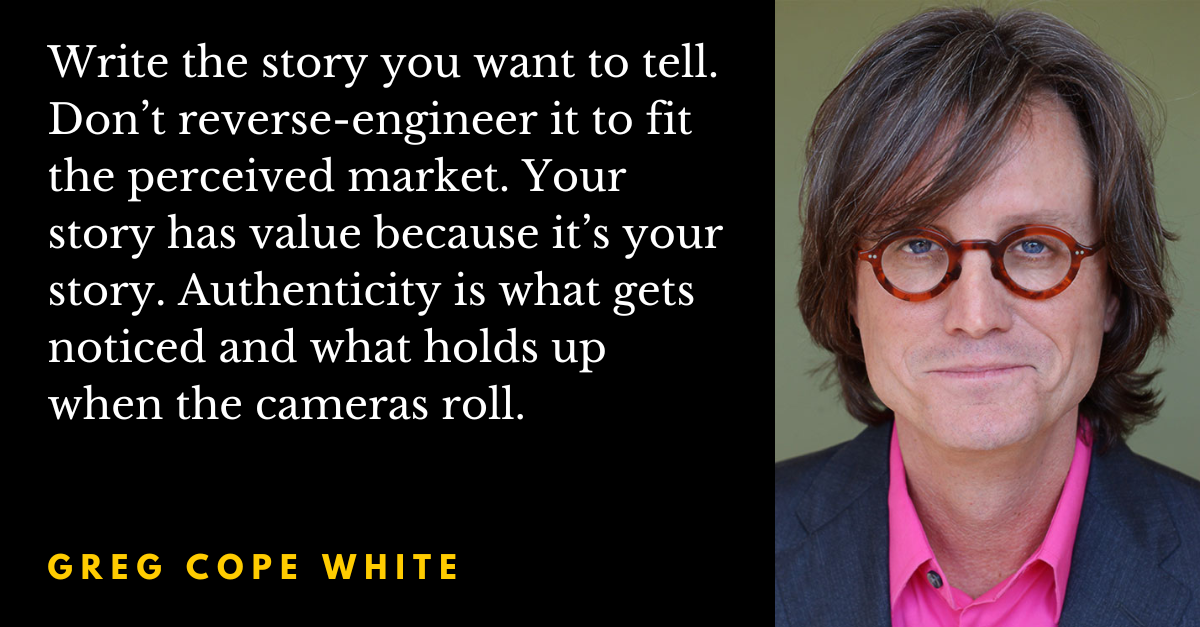

Greg Cope White is a memoirist, a screenwriter and a producer. As a gay teenager, he followed his (straight) best friend into a summer-long U.S. Marines boot camp (as the back cover copy reads, “he only heard summer and camp”). This was before “don’t ask, don’t tell,” and being exposed as gay would have cost him both his job and his reputation. Yet Greg continued to serve in the Marines for six years; he ultimately attained the rank of Sergeant. After leaving the Marines, he moved to New York and LA to pursue acting and writing. In addition to his best-selling memoir The Pink Marine, Greg has written television shows and movies produced by Sony, CBS, NBC, Fox, Disney, Comedy Central, HBO, and Netflix.

Although I’m now a developmental editor and writing coach, I began my career writing and performing comedy, as well as writing for television. A few years later, I became a national film and television critic. Story and storytelling are my jam, regardless of medium. Many memoirists dream of having their memoir optioned and produced as a series, so when I met Greg via Instagram, I immediately thought of interviewing him for Jane’s readers.
Greg’s bio describes him as an “inveterate bon vivant,” which is both true to my experience and also gives you a sense of the ‘fish out of water’ nature of writing The Pink Marine and being a writer on its Netflix adaptation, Boots, which drops today. Greg generously offered to share his wisdom about the process of going from page to screen.
Sarah Chauncey: You recently posted a quote on social media about the time frame around your writing career. Could you recap that here?
Greg Cope White: I was 26 when I left the Marines and moved to New York. A couple of years later, I headed to LA to edge into writing. I’m self-taught, so it took time to figure out how to do that and then break into a room. I joined my first writers’ room at 32. By 50, I turned off the TV to write my memoir, which I published at 55. Back to screenwriting: sold my first movie at 57, the next two at 58, sold my memoir to Sony/Netflix at 60, walked into that writer’s room at 61, production (which was delayed by the WGA and SAG-AFTRA strikes) wrapped at 64. I’m 65, and the series streams October 9. (…If I exercise, eat right and look both ways before crossing the street…)
Moral of the story: Write when you’re ready.
Before you wrote your memoir, you were already a screenwriter. What skills from screenwriting helped you write the memoir? What was most challenging?
The hardest part was overcoming my lack of a college education and learning the long-form writing game. Scripts I knew. A book was intimidating. I started, stopped, shoved the book in a drawer, but it kept gnawing at me. For twenty years. My clever boyfriend challenged me to write a short story. Less scary. I wrote one, he built a blog, and after two years of blogging (picked up by HuffPo and others) I finally had the muscles to pound out a first draft. As you know, that’s only the beginning of a book’s publication odyssey. I owe a lot to my editor, Nicole Klungle.
In a script, we use fewer words to establish tone because an actor, director and set designer, etc. will put their own stank on it. In a book, if necessary, I can spend pages on what blue means to me. I wrote the book cinematically, to not only take the reader on my ride, but also to elucidate the potential for a series.
TV comedy trained me in two essentials: timing and relatability. Few readers have served in the Marines, but everyone understands humor. Wrapping the military moments with comedy let me connect with a wider audience.
How did you find your publisher? Was your screenwriting agent willing to submit you to acquiring editors?
My agent found the publisher, but after release it became clear he wasn’t the right fit. I learned that the hard way—on book tour, with a heart attack. I survived, canceled the contract, and with my boyfriend, launched our own imprint. We republished the book ourselves. Now it is a self-published book. Highly recommend all of that—except the heart attack.
You had a significant boost from Norman Lear (creator of All in the Family, One Day at a Time, The Princess Bride and other progressive comedies). Tell us about working with him and the role he played in having The Pink Marine optioned for a series.
Norman was my idol long before he became my mentor. He called me “Sergeant” because he loved my Marine stories. He’s a combat veteran, a legendary LGBTQ+ ally, and a believer in voices like mine. I wrote on two of his sitcoms, The Powers That Be and 704 Hauser Street, as well as developing other shows with him.
Developing the book into a series with Norman was a three-year process of ups and downs. Another producer, Rachel Davidson, optioned the book. Norman then developed the series with us. Once he found his way in, he took it to Sony as a project he wanted to make. It was a ten-year labor of love.
His advice still motivates me: “There’s room for everyone in this business,” and “You never learn anything from praise.” That last one is my motto, whether I’m getting or giving notes.
What were some of the changes made to the story (and why)? How did you feel about them initially?
The book is the book; the show is the show.
The memoir is a deeply personal coming-of-age story about me, my childhood best friend Dale, and surviving Marine Corps boot camp. From the day I signed the enlistment contract, my world view was expanded, constantly. I got to know all the unique characters that made up our platoon.
The show is not a biopic. Our showrunner opened it up to explore the entire platoon—many characters from the book, some newly created. Cameron Cope and Ray McAffey are based on me and Dale, but we also take them to places I never did. And I am very proud of the way Miles Heizer and Liam Oh portray their characters. I write both and love them both—together and separately.
I got to experience the true feeling of camaraderie while in boot camp and then again with our writing staff and cast on set.

What were some of your “darlings” from the memoir that had to be cut for the series?
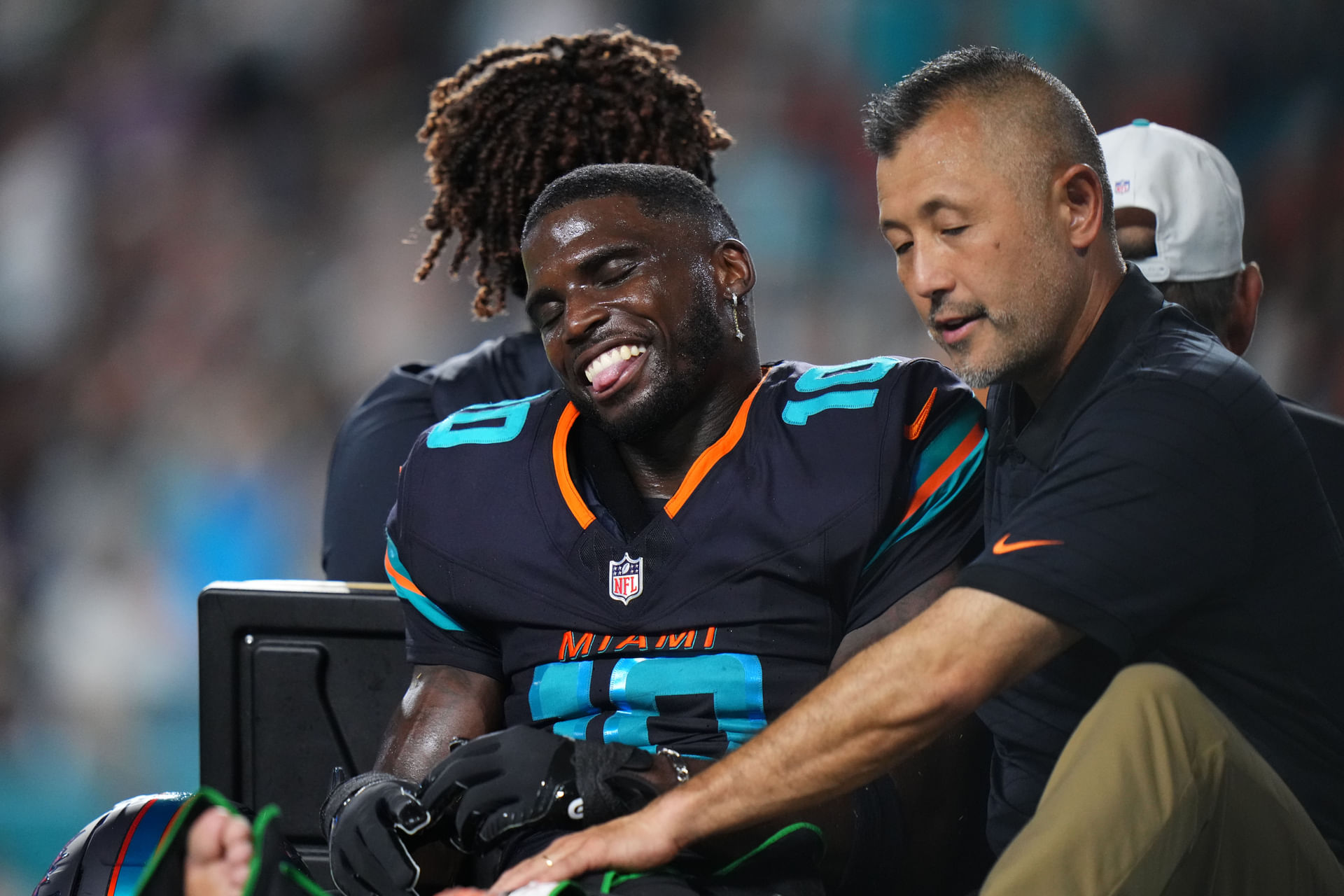
The toughest loss was the title. We all loved The Pink Marine, but for the series we needed something that reflected the ensemble. We pulled on our Boots. Forward march.
As a writer on the show, my job is to support the showrunner/creator Andy Parker’s vision. Which meant I sometimes participated in the murder of my own darlings. But often those Greg-centric stories got resurrected to support another character’s arc, which made the whole show stronger.
What advice would you offer memoir writers who want their stories to appeal to development executives?
Write the story you want to tell. Don’t reverse-engineer it to fit the perceived market. Your story has value because it’s your story. Authenticity is what gets noticed and what holds up when the cameras roll.
What’s next on your writing horizon?
To be back in the Boots writers’ room for Season Two, should the viewers decide they want more.
Also my next book is out hopefully mid-2026. The Pink Marine is about wanting to find my place in the world via an extreme, unlikely path. My next book is a collection of short stories: Marines, misadventures in 1980s New York, and my literal wild ride to LA to find out where my voice fits in the writing world—and, sorry, but there’s a love story tangled in there.
And then I’ll write a book on what to expect when you’re expecting your book to be a series.
Thank you for your time, and congratulations!
Learn more about The Pink Marine, and watch Boots on Netflix.




Leave a Reply