
 Alamy
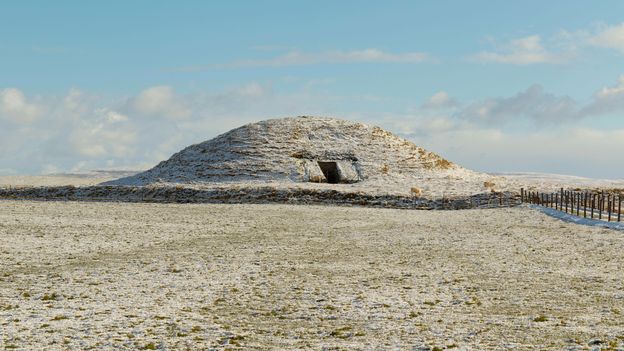
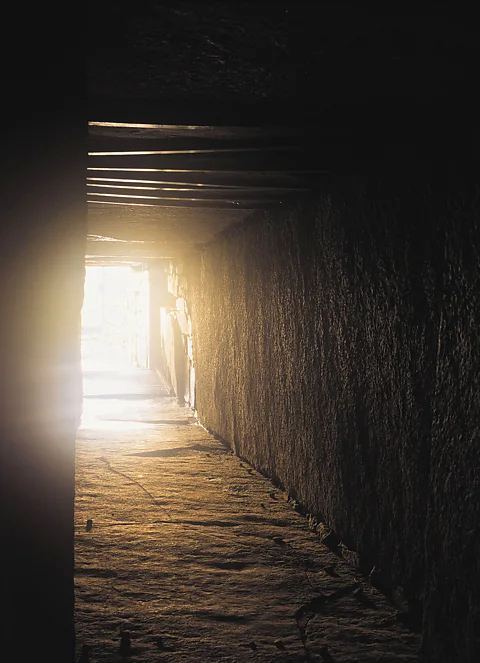
AlamyWe will probably never know the specific beliefs and rituals that inspired Maeshowe tomb. But it’s nonetheless possible to understand the enormous significance of the winter solstice as the “year’s midnight”, both as the darkest moment in the calendar and the pivot to six future months of greater illumination. It was a moment of death and rebirth, and a reminder of the cyclical nature of time.
In the deep past, understanding the markers of nature’s clockwork – including solstices – was a matter of survival. Predicting the recurrent patterns of animal migration, for example, could help successful hunting and fishing. Knowing when the climate was likely to change meant being able to adapt and survive. In pre-agricultural societies, it helped people anticipate the availability and location of edible roots, nuts and plants.
After the introduction of farming, around 9000BC, it was essential – for successful planting and harvesting – to anticipate the timing of seasonal changes. Monuments that calculated time had practical value, but it’s likely that they also embodied spiritual beliefs in Neolithic times too, with the winter solstice being of particular importance. This very ancient recognition of the solstice’s significance even echoes through to the modern world. The word “Yule”, now associated with the winter holiday period, derives from the historic Norse festival of Jól, which was based around the winter solstice. Modern Christmas traditions recall bygone midwinter celebrations like the Roman holiday of Saturnalia, which involved feasting and gift-giving. And the solstice continues to be acknowledged in hundreds of traditions across the world, such as the Inca celebration of Inti Raymi, and the Dōngzhì festival in China.
‘Nature’s sublime power’
Alongside Maeshowe tomb, archaeologists have discovered dozens of Neolithic monuments that stare directly at the Sun on the winter solstice. There’s Stonehenge (England), whose tallest trilithon once framed the setting sun; Newgrange (Ireland), which has a passageway aligned to sunrise on this auspicious day; and the standing stones at Callanish (Outer Hebrides) which create similar solar sightlines. In Brittany, north-western France, is La Roche aux Fées: a megalithic passageway constructed from 41 blocks of stone, some of which weigh over 40 tonnes (40,000kg). At sunrise on the winter solstice, it breathes in its annual dose of restorative midwinter light. Legends once told that fairies constructed it over the course of one night, but it is actually a dolmen (tomb) created by Neolithic architects around 2750BC.





Leave a Reply