Have you ever watched as a child stares into an aquarium with awe? Whether it’s the song “Baby Beluga” or the movie Finding Nemo, kids love all things ocean! So you know they’ll be eager to dive into this collection of ocean activities and crafts. Whether it is a science experiment to learn how acid affects seashells, an art lesson where students create their own underwater scene, or a writing prompt about the ocean, students will learn all about our watery planet. Come on in … the water’s fine!
Jump to:
Ocean Experiments and Learning Activities
FEATURED PICK
1. Learn about sea turtles and marine ecosystems
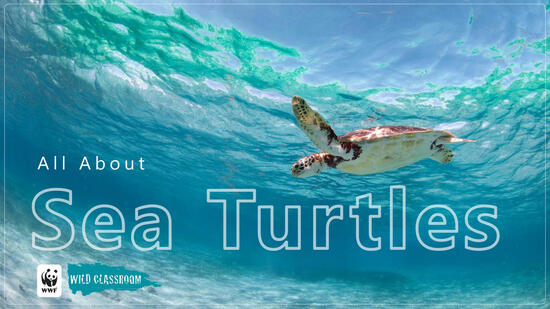
Make a splash with Wild Classroom’s free Sea Turtles and Oceans Toolkit. This ready-to-use resource helps students learn about ocean ecosystems by providing an educator’s guide, presentation, and fun, cross-curricular activities. You will also get bonus resources like quizzes and a video playlist, offering diverse ways to enrich your lessons. It is a great way to build critical thinking skills and inspire a love for ocean conservation.
2. Make an ocean in a bottle
Turn an old water bottle into a mini-aquarium. Fill it about a third of the way with sand. Then drop in some small shells and plastic fish and other sea creatures. Finally, top the bottle off with water (it’s up to you whether you want to dye it light blue first) and screw on the lid. (Avoid spills by adding a few drops of glue to the threads of the cap first.) Now kids can explore the ocean anywhere they go!

3. Take a virtual aquarium field trip
Can’t get to the aquarium? No problem! Take a virtual field trip instead with live webcams and video tours.
Learn more: Best Aquarium Virtual Field Trips
4. Learn how ocean currents work
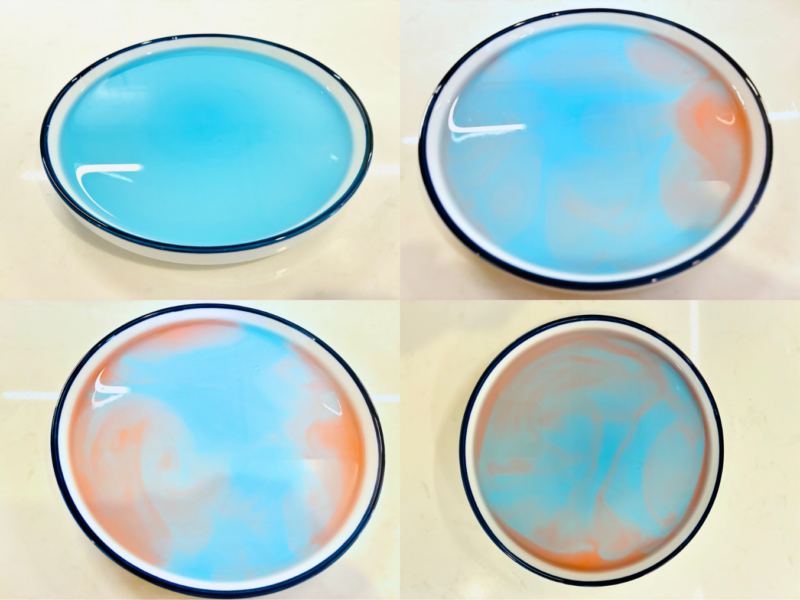
All you need for this science experiment is a shallow dish, hot and cold water, and some food coloring. Fill the dish about halfway with cold water that’s tinted light blue. Add some ice and stir so your water becomes very cold. Bring a few cups of water to a boil, adding food coloring to make it very bright red. Slowly (and carefully!) pour some hot water into one corner of the dish. Watch as the warm and cold water swirls and mixes, simulating the ocean currents that are formed the same way!
5. Assemble ocean zone bottles
Learn the zones of the ocean with this simple ocean activity. Round up four empty bottles and label them, one for each zone: sunlight, twilight, midnight, and abyssal. Use food coloring to dye the water in each deeper shades of blue to represent the amount of sunlight that reaches each zone. Finally, drop in a marine animal toy or fish that’s appropriate for each zone.
6. Watch an ocean documentary
Every streaming service is loaded with nature documentaries. Disney+ has an especially robust collection that’s perfect for kids. On Amazon, try Wildest Places or Ocean Mysteries. Netflix’s Our Planet series has episodes on coastal seas and high seas. So many options!
7. Assign an ocean-themed writing prompt
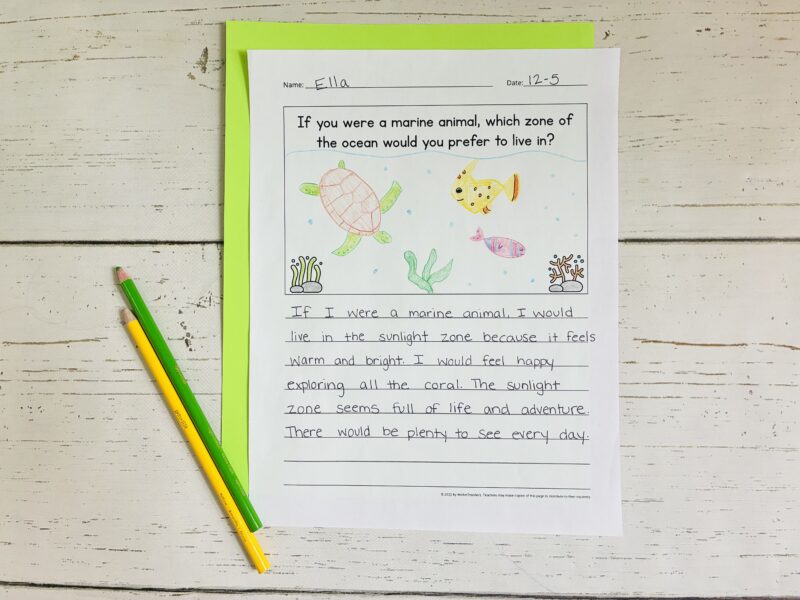
Use ocean-themed prompts for daily writing, journal entries, essay topics, bell ringers, or exit tickets. Some possible prompts:
- If you were a marine animal, which zone of the ocean would you prefer to live in?
- What would it be like to live in a coral reef?
- Tell the story of a female sea turtle, from the time she hatches on the beach until she returns to that same beach years later to lay eggs of her own.
- Write about a journey in a submarine to explore the deepest parts of the ocean.
- Describe a day in the life of a marine biologist. What are they studying, and how do they go about it?
8. Turn paint sample strips into ocean layers
You’ll need paint sample strips in at least four deepening shades of blue; you can also add a beige color for the sandy bottom if you like. (Contact your local paint store for donations if you need more than just a few strips.) Label each paint color with one of the four zones, using deeper colors to represent deeper zones. Kids can write in descriptions of the zones, or add drawings and stickers of marine animals to each.
9. See ocean waves in action

Oil and water don’t mix, which makes them the perfect way to observe wave action up close. You’ll need a glass jar with a tight-fitting lid, plus water, oil, and blue food coloring. Fill the jar with water about halfway, add a few drops of food coloring, and mix. Fill the container the rest of the way with oil, getting as close to the top of the jar as possible, and put the lid on tightly. Turn the jar on its side and tilt it back and forth. Watch as the waves ripple and react to one another.
10. Host a marine animal fair
Let kids choose their favorite marine animal, then spend time teaching them how to research using trusted sources (see below for a list of kid-friendly ocean resources). Let them choose how they’ll present their animal—posters, dioramas, slideshows, presentations, etc. Then, set up your classroom as a “marine animal fair” and invite other classes and parents to come see what they’ve learned!
11. Draw a life-size whale
Did you know that blue whales are the largest creatures ever to have lived on Earth? They’re even bigger than dinosaurs! Head to the playground with some sidewalk chalk and a tape measure to measure out and draw a life-size blue whale. Kids will be astonished at the results. Find blue whale info from National Geographic here.
12. Explore saltwater density
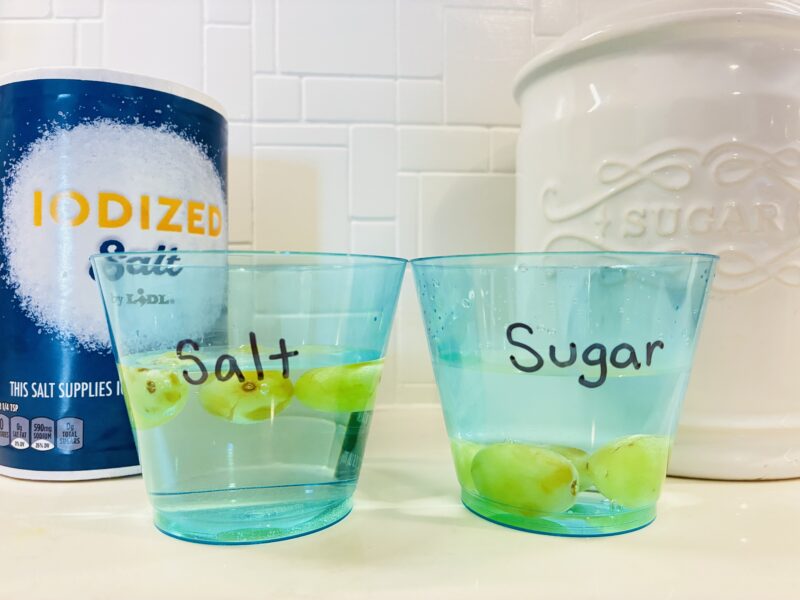
Use this easy ocean experiment to show that items float more easily in salt water than fresh. Fill three clear glasses with water about three-quarters of the way. Add 2 tbsp. of salt to one cup, 2 tbsp. of sugar to another, and mix thoroughly. Ask kids to predict what will happen when you drop grapes into each glass, then drop them in to see if they’re right. The grapes should float in the salt water. (Add more salt if they don’t.)
13. Sculpt an ocean floor relief map
Start by learning about Marie Tharp and her groundbreaking work mapping the ocean floor. (She proved plate tectonics with her meticulous work!) Then, use play dough, salt dough, or another medium to represent the depths of one or more of the world’s oceans. It’s an amazing world down there!
14. Put together an ocean animal notebook
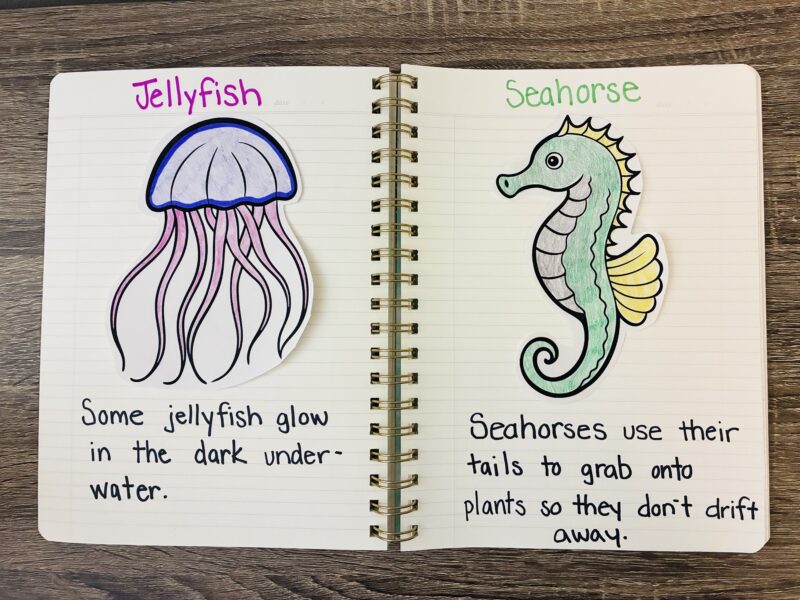
Turn a blank notebook into an ocean reference manual. Draw or paste a picture of an animal on each page, then write in interesting facts about them. This is an ocean activity that will appeal to kids of any age, since you can vary the level of details you include.
15. Discover how ocean acidification affects seashells
One consequence of climate change is the increasing acidification of the world’s oceans. Learn why this matters so much with a simple experiment using seashells and vinegar. Add a shell to a jar, then cover it completely with vinegar. Observe what happens—before long, you’ll see carbon dioxide bubbles form as the vinegar begins to dissolve the calcium in the shell. Leave it long enough and the shell will become fragile and eventually dissolve completely.
16. Dive into an ocean-themed sensory bin
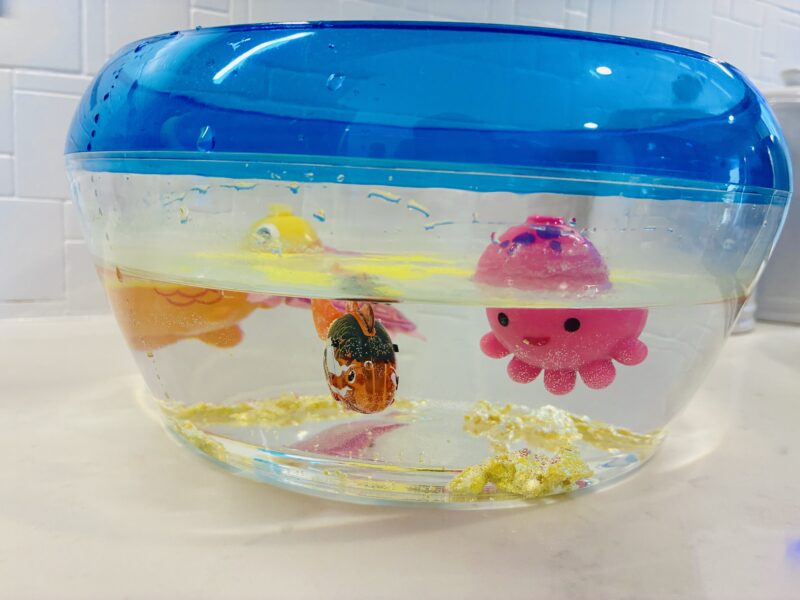
Make a bigger version of an ocean in a bottle so kids can splash around a bit. Round up shells, toy sea animals, and maybe even a boat or two, then drop them into a bin of water. Every kid will enjoy splashing around while they learn!
17. Simulate and clean up an oil spill
Oil spills at sea are major disasters, affecting life both in the water and on land. Learn about some of the more famous oil spoils in history, then try this experiment. Fill a shallow baking dish about halfway with water. Drop in some small toy fish and sea creatures. Then, add food coloring to some oil and “spill” it into the water. Now, experiment with different methods to clean up the oil. Is it even possible to fully restore the water to its pristine condition?
Ocean Crafts and Art Projects for Kids
18. Download free ocean coloring pages
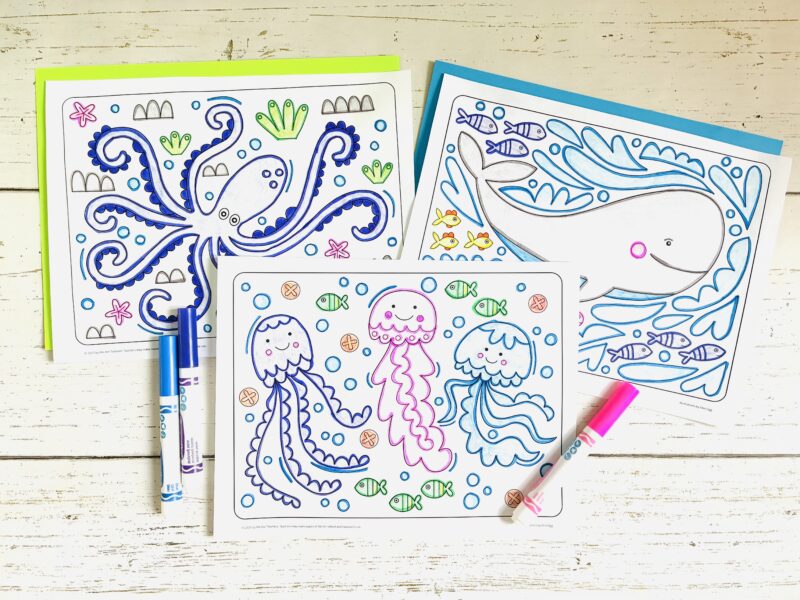
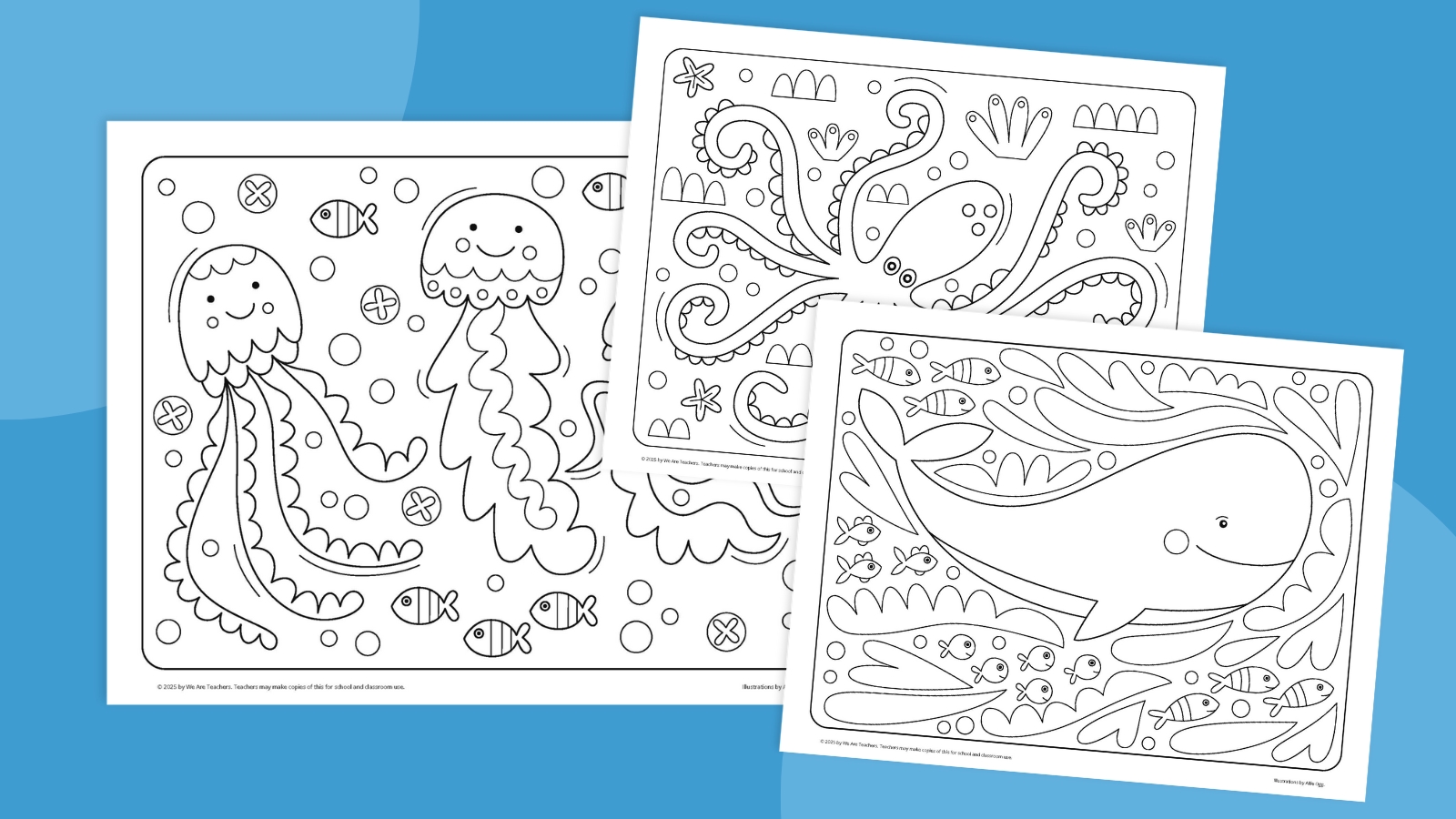
Our octopus, whale, and jellyfish coloring pages are perfect for when you need a quick and easy activity for kids. Keep them on hand for early finishers or use them as bell-ringer activities, or display a collection of them for a no-stress bulletin board.
19. Create an ocean in an egg carton
Give each child an egg carton to paint blue like the ocean. After they’re dry, they can decorate the inside of the lid to look like a reef or sandy floor. Then, they can keep shells, rocks, or fish and marine animal toys in each compartment.
20. Upcycle an ocean zones container
For this ocean craft, you’ll need a tube-shaped container like an empty sanitizing-wipes tub or even a Pringles can. You’ll also need four shades of blue tissue or crepe paper: light, medium, dark, and midnight blue. Spread some glue on the container and wrap the crepe paper around it in an ombre effect, with the lightest blue at the top. Label each layer and add stickers representing the animals that live in each. Now you’ve got an upcycled storage container for your shells or ocean-themed toys.
21. Build LEGO sea creatures

Pull out the tub of LEGO and set kids free to create. The whole class can work together to set up an ocean-themed diorama, using LEGO bricks to make coral, seaweed, fish, whales, jellyfish, and more.
22. Paint a coral reef with sponges
Here’s another surprisingly easy ocean craft for kids. Cut disposable sponges into coral shapes, then stamp an underwater scene onto blue paper. Use markers, paint, or stickers to add fish and other marine animals to complete the picture.
23. Illustrate inspirational ocean quotes
Have kids choose a quote they love from our big collection of ocean quotes, then turn that quote into a poster. These make perfect hallway displays that will educate and inspire other students!
Learn more: Ocean Quotes That Inspire Wonder
24. Sculpt sea stars from salt dough
Starfish, more properly known as “sea stars,” come in a wide variety of sizes and designs, but they all live in salt water. That makes salt dough the perfect medium for this ocean craft. To make it, just mix 2 cups of flour, 1 cup of salt, and 1 cup of water. Mix and knead until the dough is smooth, then store in an airtight container until you’re ready to use it.
25. Hang paper plate jellyfish
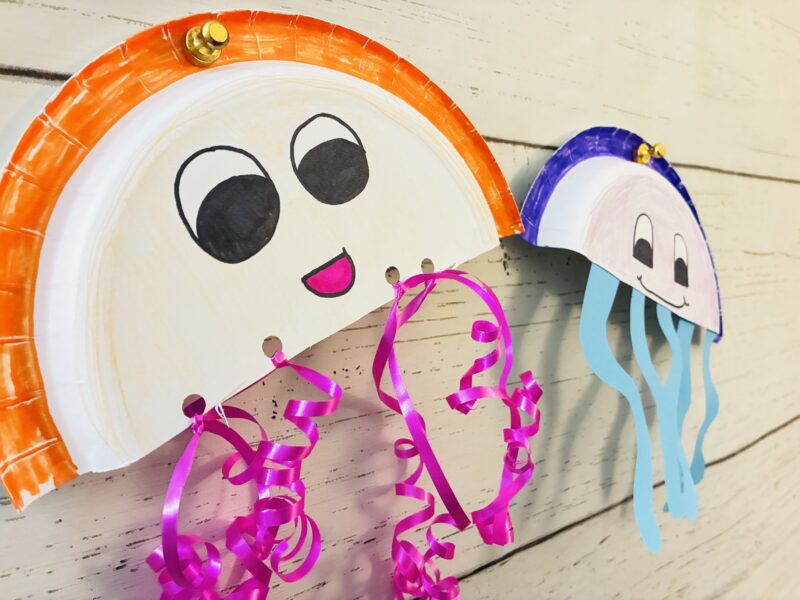
Cut paper plates in half to create the bell-shaped body of a jellyfish, and let kids paint or color them any way they life. Then, show them how to use a hole punch to create a row of holes along the bottom flat part of the bell. Tie ribbon or yarn to each hole to create dangling tentacles, then hang your ocean crafts.
26. Make a cereal box aquarium diorama
The hardest part of this ocean craft is trimming one large side of the box to form a frame. After that, kids can use construction paper, paint, shells, rocks, and other art supplies to create their own undersea scene. They’ll love the creative aspect of this project.
27. Mix up ocean-themed slime
Use one of our foolproof recipes to show kids how to make their own slime. Then, provide mix-ins like glitter, sequins, and small fish or ocean animals to add to the fun. You know they’re going to love this ocean craft!
Learn more: How To Make Slime
28. Put together an ocean collage
This easy ocean craft is a great way to use up old magazines. Kids choose a specific theme, like coral reefs, deep-water creatures, beaches, marine mammals, ocean pollution, and so on. Then, they cut out and paste pictures and words that match their theme. Making collages is a simple art activity that every kid loves.
Resources for Learning About the Ocean
29. Ocean Books for Kids
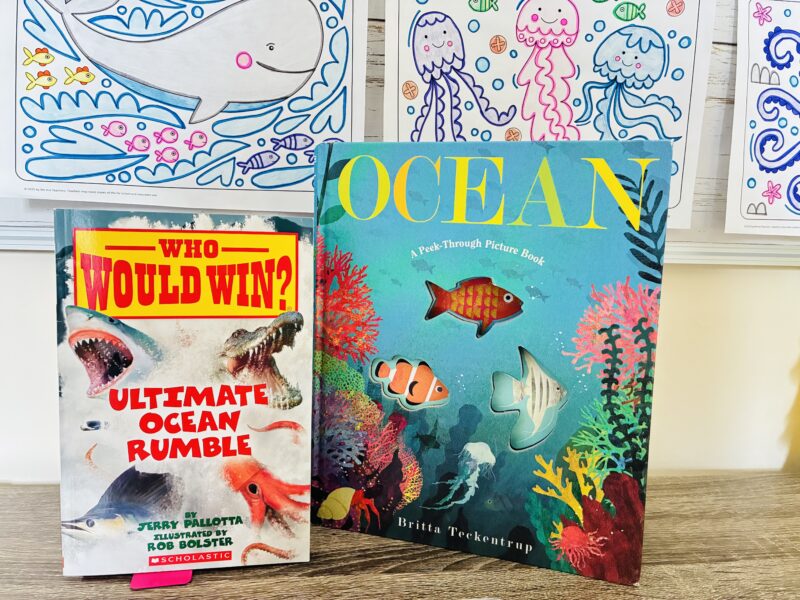
Whether you’re looking for picture books or chapter books, fiction or nonfiction, our list of terrific ocean books has got you covered!
Learn more: Fascinating Ocean Books for Kids
30. Ocean Facts for Kids
Our big list of reliably sourced facts will fascinate and amaze your students! You can even download a free set of Google Slides to share in the classroom.
Learn more: Ocean Facts for Kids
31. Marine Life Encyclopedia
Looking for online ocean activities? Try the Marine Life Encyclopedia. Kids will get in-depth information about all their favorite sea creatures, from sharks to otters and beyond.
Learn more: Marine Life Encyclopedia
32. Dive and Discover With Woods Hole
Here’s another website full of online ocean activities. It simulates the thrill of joining actual underwater explorations, from coral reefs to deep-sea trenches.
Learn more: Dive and Discover: Expeditions to the Sea Floor
33. Smithsonian Ocean Life
Just as you’d expect from the Smithsonian, this website is full of information, photos, and more ocean activities. You’ll even find free lesson plans for teachers—score!
Learn more: Smithsonian Ocean Life
34. NOAA for Kids
The National Oceanic and Atmospheric Administration has a whole page full of ocean activities, articles, and videos just for kids! There’s a lot here to explore, including plenty of hands-on experiments and exploration ideas.
Learn more: NOAA for Kids
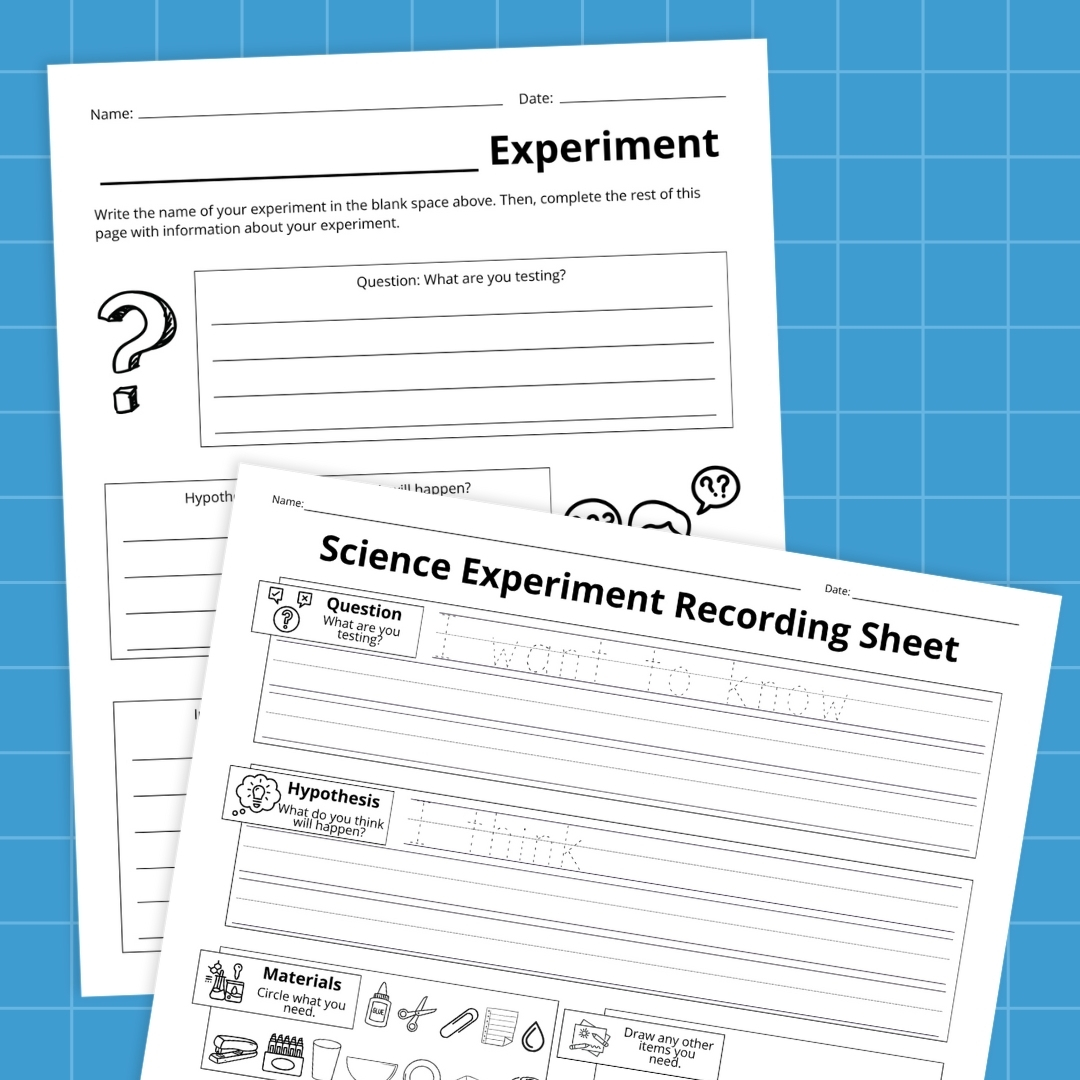
Don’t forget to grab your free experiment recording sheet printables!
Make the most of your ocean science experiments with our free printable science experiment worksheet! Just click the button to grab your copy now.



Leave a Reply