4. The Hollow Man (1935) – John Dickson Carr
When it comes to locked-room mysteries specifically, few are as high calibre as The Hollow Man. The novel is specifically referenced in Wake Up Dead Man by Daniel Craig’s detective Benoit Blanc, and Knives Our creator Rian Johnson has praised it as “an incredible, intricate locked-door puzzle”. Featuring Carr’s regular detective lead, Gideon Fell, it sees him left to solve the murder of Professor Charles Grimaud, found shot dead in his study moments after receiving a mysterious visitor, who has vanished without trace. The tricksy novel won plaudits from crime fans and general readers alike, not least for its in-character lecture from Fell late on about the very nature of locked-room mysteries and their possible solutions; such was its impact, this chapter has itself been re-published as a standalone essay on numerous occasions, in spite of being delivered by a fictional detective.
5. Green for Danger (1946) – Sidney Gilliat
Adapting a novel by lesser-known golden-age crime author Christianna Brand, British director Sidney Gilliat was an excellent choice for heightening an already perplexing whodunnit due to his experience co-scripting Alfred Hitchcock’s thriller The Lady Vanishes (1938). But Green for Danger shows Gilliat’s directorial skill to be equally suited to the murder mystery. Brand’s story follows Inspector Cockrill (played by the perfectly louche Alastair Sim) as he gets to the bottom of a double-murder; one skilfully conducted in a medical theatre during an operation, and another seeing off a witness to the first during a World War Two blackout. Cockrill must disentangle a web of liaisons and tensions among the hospital’s small coterie of suspect staff, while also navigating the natural chaos of wartime England.

 Alamy
Alamy6. The Living and the Dead (1954) – Boileau-Narcejac
French crime-writing partnership Pierre Boileau and Thomas Narcejac monopolised the market in the 1950s with a range of complex crime thrillers, including the brilliant She Who Was No More (adapted by director Henri Georges Clouzot as film classic Les Diaboliques). Another of their novels, 1954’s The Living and the Dead, is most famous for the film it inspired, Alfred Hitchcock’s Vertigo (1958), and equally showcases their skill with depicting emotional trauma and serving up relentlessly brutal twists. When Parisian lawyer Roger is tasked by his friend Gevigne to investigate his wife’s strange behaviour, Roger ends up inevitably falling for her. What follows is a haunting mixture of supernatural insinuation and unsparing criminal machinations, as a simple investigation inevitably conceals a far more complex murder.
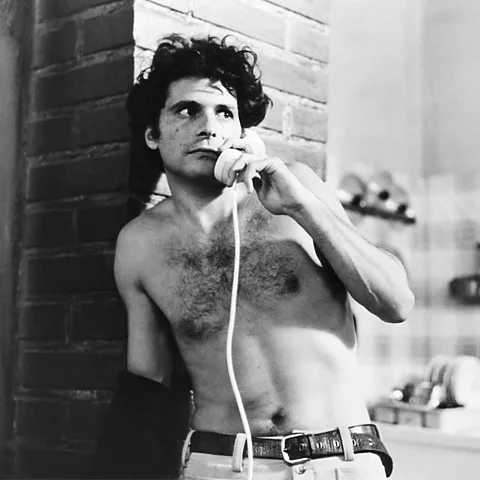
7. The Bird with the Crystal Plumage (1970) – Dario Argento
The Italian film genre of Giallo is a must for any murder mystery fan after a higher dose of gore. Taking their name from the lurid, yellow covers of paperback murder thrillers, Giallo films looked to whodunnit stories in translation for inspiration, and added a healthy injection of bloody horror. None were as successful in this endeavour as the brilliant Dario Argento, and his debut feature The Bird with the Crystal Plumage (1970) showcases his visual talent and psychological insight. When US writer Sam (Tony Musante) witnesses the attempted murder of Monica (Eva Renzi) in a Roman art gallery late at night, he is quickly plunged into a tense story haunted by a black-hatted, leather-gloved killer. Like many of Argento’s Giallo films, the dramatic twists and turns are matched by the sheer, audacious violence which often achieves a kind of operatic quality, right until the very final reveal of the killer.
 Alamy
Alamy8. The Black Tower (1975) – PD James
British writer PD James (alongside another genius, Ruth Rendell) inherited Agatha Christie’s mantle as the queen of the traditional detection and murder mystery novel. Her books following DI Adam Dalgliesh is really her crowning achievement, and The Black Tower (1975) is a great example of the series’ very particular character. With more of a morbid hue than her other Dalgliesh novels, thanks to her hero being off-duty and recovering from leukaemia, The Black Tower follows him as his convalescence is interrupted by a series of increasingly suspicious deaths at a rural care home. Initially considered somewhat too slow-paced by critics – with Newgate Callendar of The New York Times suggesting the book was “heavy going” and would “try the patience of most readers” – in hindsight The Black Tower perfectly highlights James’s distinct approach as a crime novelist, favouring meticulous detail, precise characterisation and melancholy atmosphere over pyrotechnics and showy shocks.
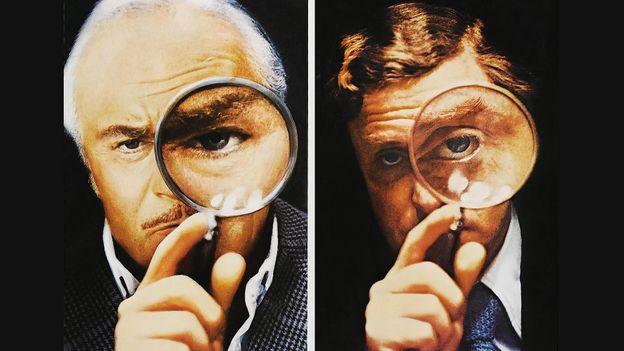
9. Sleuth (1972) – Joseph L Mankiewicz
An adaptation by Anthony Shaffer of his own play, Mankiewicz’s Sleuth (1972) is perhaps the most self-aware entry on this list, due to its characters’ fluency in murder mystery clichés and tropes. Pitting crime novelist Andrew (Laurence Olivier) against his wife’s lover Milo (Michael Caine), the plot descends into a nasty power-play in which the pair fake crimes in order to manipulate each other. The film received even more critical acclaim than the stage-play, with four Oscar nominations, including one each for Olivier and Caine. While built as much on the powerhouse performances of these leading men, Sleuth certainly showed Shaffer firing on all cylinders; its witty sleight-of-hands and unforgiving denouement are utterly unforgettable.
 Alamy
Alamy10. Have Mercy on Us All (2001) – Fred Vargas
One of France’s greatest living crime writers, Vargas (real name Frédérique Audoin-Rouzeau) continues the Gallic trend honed by Georges Simenon and Boileau-Narcejac of splicing murder mysteries with more Gothic stylistics. Indeed, her series of novels following the chaotic Commissaire Adamsberg often render Paris as a city more within the eerie traditions of Victor Hugo’s The Hunchback of Notre Dame and Gaston Leroux’s The Phantom of the Opera than a modern crime novel. This one, somewhat anachronistically, revolves around a town crier in Paris’s 14th arrondissement who is paid by a mystery person to recite cryptic, ominous messages about a plague soon to return to the city. When plague symbols appear on the doors of locals, followed by deaths appearing to be the result of plague-ridden flea bites blackening the flesh, Adamsberg embarks on a particularly dark investigation in this bleak but utterly gripping page-turner.
—
If you liked this story, sign up for the Essential List newsletter – a handpicked selection of features, videos and can’t-miss news, delivered to your inbox twice a week.
For more Culture stories from the BBC, follow us on Facebook and Instagram.




Leave a Reply