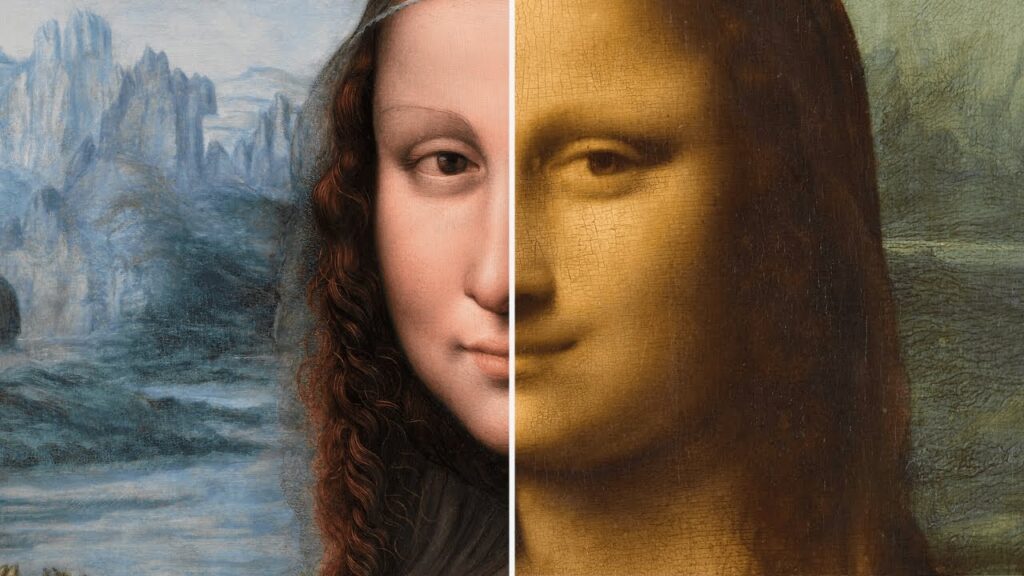
If you want to see the Mona Lisa in real life, your first thought may not be to head to the Prado. But according to a school of thought that has emerged in recent years, the Mona Lisa in Madrid has a greater claim to artistic faithfulness than the one in Paris. That’s because researchers have discovered compelling evidence suggesting that what was long considered just another copy of the most famous painting in the world wasn’t made after Leonardo had completed the original, but concurrently with the original, probably by one of his students. Over half a millennium, in this view, the Prado’s Mona Lisa has retained the colors and details the Louvre’s has lost, resulting in its preservation of Leonardo’s intentions today.
Infrared photography has even revealed, says the narrator of the new Inspiraggio video above, that both paintings “share the same changes in the original sketch. For years, it has been known that Leonardo made small corrections to the shape of the Mona Lisa’s hands, adjustments to the line of the eyes, and subtle modifications to the curve of the face,” the very same corrections that were found in the newly examined copy.
Unlike other copies, the Prado’s version uses “incredibly expensive pigments” such as lapis lazuli—imported from Afghanistan—for the sky. This only became evident during the 2012 restoration, when the background, long hidden under a thick layer of black, was finally uncovered.
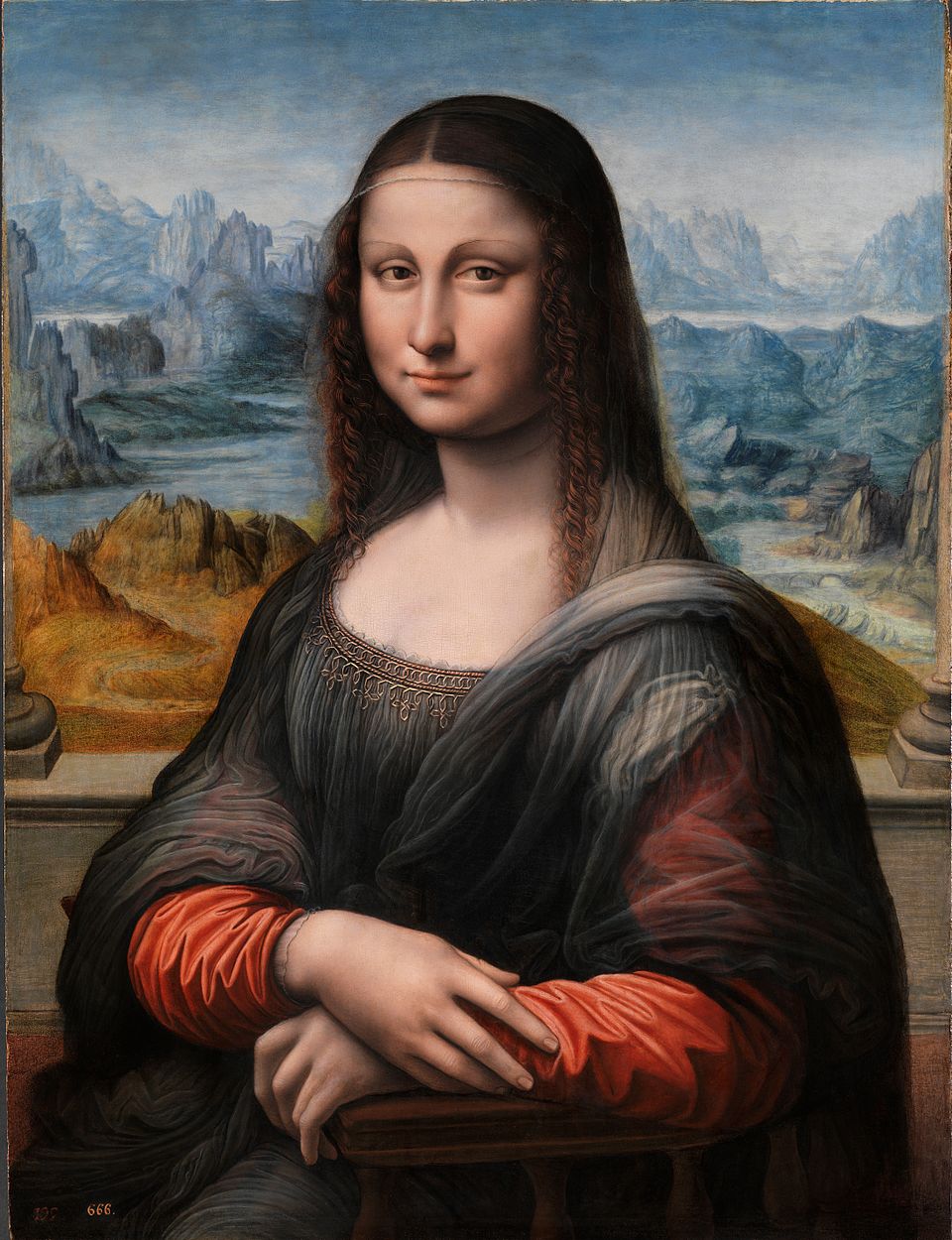
Thereafter, the Prado Mona Lisa was exhibited alongside the Mona Lisa at the Louvre in a temporary exhibition. This gave the public the chance to see both how similar they look, and how different. Though undeniably La Gioconda, the copy doesn’t seem quite “right,” in large part because it hasn’t deteriorated in the manner or to the degree of the original. Leonardo painted it on a poplar wood panel that has given way to countless small cracks, and the layers of yellow varnish added over the centuries have darkened to give the whole image a sepia tone. The result, of course, is the texture and coloring we’ve come to associate with the Mona Lisa by ceaseless exposure to her in popular culture, even if we’ve never seen any version hanging in any museum. If the Prado’s copy really does reflect Leonardo’s original artistic choices, we can put at least one hotly debated matter to rest: the lady really did have eyebrows.
Related content:
What Makes Leonardo’s Mona Lisa a Great Painting?: An Explanation in 15 Minutes
Did Leonardo da Vinci Paint a First Mona Lisa Before the Mona Lisa?
How Did the Mona Lisa Become the World’s Most Famous Painting?: It’s Not What You Think
Original Portrait of the Mona Lisa Found Beneath the Paint Layers of da Vinci’s Masterpiece
Based in Seoul, Colin Marshall writes and broadcasts on cities, language, and culture. His projects include the Substack newsletter Books on Cities and the book The Stateless City: a Walk through 21st-Century Los Angeles. Follow him on the social network formerly known as Twitter at @colinmarshall.



Leave a Reply