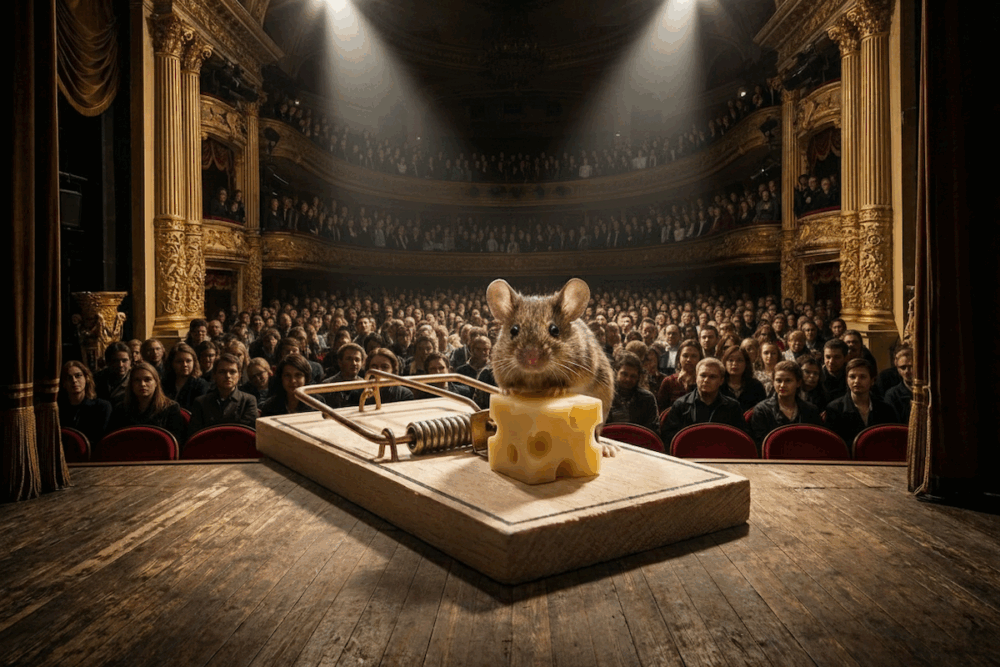
Today’s post is by author and journalist Mary Garden.
But first, a note from Jane: Ever since I’ve been in the business, there have been pay-to-play book awards. They make up the majority of book awards, in fact. (Book awards where authors don’t pay typically can’t be entered by authors, can only be entered by traditional publishers, and/or require someone to nominate your work.)
Not all pay-to-play book awards are scams; the good ones do have their uses. Not long ago, an author discussed the potential value of awards in her article on this site, I Won a Writing Award. Does It Matter? I’ve also given my take on such awards for indie authors at IngramSpark’s blog.
Some of these awards do little harm, others are genuinely useful, but most of them make no difference at all to your career or sales. Still, they might make you feel good. Be sure to review the Writer Beware contests & awards archive to get a sense of what’s out there, what the truly bad ones are like, and how to invest your money (and time) wisely.
The following article uses a fake name for the award in question since it’s not my intent to single out any award. I find this is a very typical experience.
OK, here’s Mary.
Receiving book awards can be quite the ego boost for indie authors. I’ve entered my fair share, and my latest book, My Father’s Suitcase, is sprinkled with shiny stickers. But are they worth it? Are some just scams?
How I got sucked in
The Big Shot Quill Award (not its real name) is open to authors worldwide, regardless of publication date. In 2025, there were 129 books nominated across 17 categories—from Multicultural Peace & Harmony, Mindset & Neuro-Linguistic Programming, Personal Relationships and even Book of the Year. There were 97 finalists; a few categories had only one submission, a few had three or four.
I entered my memoir, My Father’s Suitcase, in the “Memoir” category. I could have entered it in others—nonfiction or book of the year—to increase my chances.
I was sucked in by the award’s flashy Instagram and Facebook ads. Entries opened in May 2025. I paid the $99 entry fee and soon received a congratulatory email promising me this was “a great opportunity for your book to receive the recognition it desrves [sic].”
Over the next few months, doubts crept in. Their posts looked too glitzy, too cheesy. Something felt off.
At an inaugural writers’ festival in South East Queensland (Australia) in September, the director announced that one of the presenting authors had just been named a Big Shot Quill Award finalist. Afterwards, I sidled up to the author and mentioned that my book was also a finalist, confessing my unease. I said I thought it was a rort. I can’t remember her exact reply, maybe: it’s so hard to get your book out there, you grab what you can. Maybe I was being too negative.
Then came the Zoom interview with the judging panel. One judge said, with a conspiratorial air, that she “absolutely loved” my book and launched into a discussion of epigenetics and intergenerational trauma. Both judges praised my cover—“How great, how appropriate.” Afterwards, I thought: Oh my, my book is going to win gold.
I booked flights and a hotel in Melbourne, and paid $275 for the gala dinner, and even bought gold sneakers online from New Zealand—surprisingly they were from Tauranga, my hometown. That was a good sign. Luckily, they fit. I had miscounted the finalists on the award’s social media feeds, thinking there were only four—which seemed to promise a good chance of gold, silver or bronze. There were actually 12 finalists.
Finalists, including me, shared their excitement on social media. Some were reported in newspapers:
Local author in the running for prestigious national book award… [These awards] recognise and celebrate the extraordinary achievements of inspiring writers and honour the incredible talent of authors and the impact their words have on the world.”
The author wrote, “OMG my book has made the finals 🤸🍾🎉YEE HAAAAAAA 😁 so it’s off to Melbourne I go. It’s a dream come true.”
The awards ceremony
The awards night at the festival hotel was surreal. Most attendees (I bet most were authors hoping for a medal) wore evening attire. I approached one of the organisers and chatted with her for a while. She was really lovely and asked if she could buy a copy of my book. (I’d brought along two copies, just in case.) She handed me $40, and I didn’t have change—I still owe her $5.
After mingling at the drinks bar, we entered a conference room and sat at our allotted tables. After a long speech by the organiser, there was a magic performance that went on for far too long—people stopped paying attention and chatted to each other. Other speeches followed, including the judges who all took to the stage. There were about ten of them, all women this year.
I noticed a kind of strategic emotionality—encouragement, uplift, and unity veering into cult-like territory. Authors were repeatedly called “world-changers,” “leaders,” and “visionaries,” regardless of reach or impact.
Then came the awards: 45 winners.
Those present went up on stage, shook hands with the organisers, received trophies and posed for photos. Quite a few authors had sensibly skipped the event. One told me, “I couldn’t justify spending so much to attend.” None of the 17 gold winners gave speeches.
At first, I was gutted that my book did not win. The author next to me—she had also flown down from Queensland—missed out. The author on the other side won, even though hers was the only submission in that category. One of the judges had entered her book; it had won other awards including the NYC Big Book Award 2023 but not this time.
Then the organisers had all launching authors take the stage one by one. Lights dimmed, for a “spiritual experience,” with a moment’s silence. I could not believe it. Eye-rolling and suppressed laughter rippled around me. I messaged the author from the festival, “the strangest thing I’ve ever been to in my life,” and attached a short clip of one of the authors swooning. She replied, “You did say it was a rort.”
Thank God I hadn’t won anything. I left early, sat in the back of an Uber laughing to myself: Oh, Mary. You fool.
After the awards ceremony
Although I wasn’t the only one who had misgivings—one attendee who also left early told me it was the worst event he had ever been to, it was “laughable”—looking online most were very enthused. One of the judges posted on LinkedIn:
Wow! What a brilliant platform for authors (and speakers)!!! [This] is so much more than a book award program. This is how to launch your book, build your profile and create opportunities as a thought leader or changemaker … I’m so grateful to be part of this amazing community. I feel very loved!
I emailed the award organizers afterward, asking why winners weren’t notified in advance—most awards do this—as many of us travelled from interstate at considerable expense. I received no reply.
Some weeks later, I received an email inviting me to apply to be a judge at next year’s awards: “You’ll gain a unique opportunity to support and uplift the literary community, connect with like-minded individuals, and leave your mark on this prestigious event.”
I did not reply. There would be no payment, even though the Australian Society of Authors recommends judges be paid for such work (for example, $2,250–$3,250 for judging 50–99 books). You also do not have to be an author to be a judge. Some of the 2025 judges were business entrepreneurs, described as “passionate readers and fiction enthusiasts” serving as judges for the third time. Judges provide no feedback to those who win an award, so authors have no sense of what their work was judged on or why their book won.
The author I had met at the inaugural writer’s festival won. The publisher celebrated the win:
Congratulations to the Big Shot Quill winner … We’re thrilled to see this work recognised on such a brilliant stage. [This award] is a two-day celebration in Melbourne, bringing together talented and best-selling authors from around the world to launch their books before readers, media, and industry leaders.
One of the winners was a moving biography about a young person from a remote village who, through their charity work, had helped hundreds of disadvantaged children access schooling and safe shelter. Her local newspaper reported on her winning gold, saying the author was “thrilled the book was being recognised and reaching new readers.”
Even though some of the winners seemed important and inspiring, the awards as a whole are largely vanity awards, profiting from the dreams of aspiring writers. But I still love my gold sneakers. I showed them off, tapping my feet when Tim Freedman played at Pomona’s Majestic Theatre. Some things are just too good to part with.

Mary Garden is a freelance journalist with a PhD in Journalism (University of the Sunshine Coast). Her writing has appeared in a range of publications, including The Australian, Meanjin, The Guardian, New Zealand Herald, Northern Times (Scotland) and The Humanist. She is an award-winning author of four books: The Serpent Rising, a memoir of her years with various gurus in India in the 1970s; Coming Together, a collection of poems; Sundowner of the Skies, a biography of her father, Oscar Garden, a pioneer aviator; and My Father’s Suitcase, a memoir of family dysfunction and secrets, praised by the late Maurice Gee as “disturbing”.

Leave a Reply