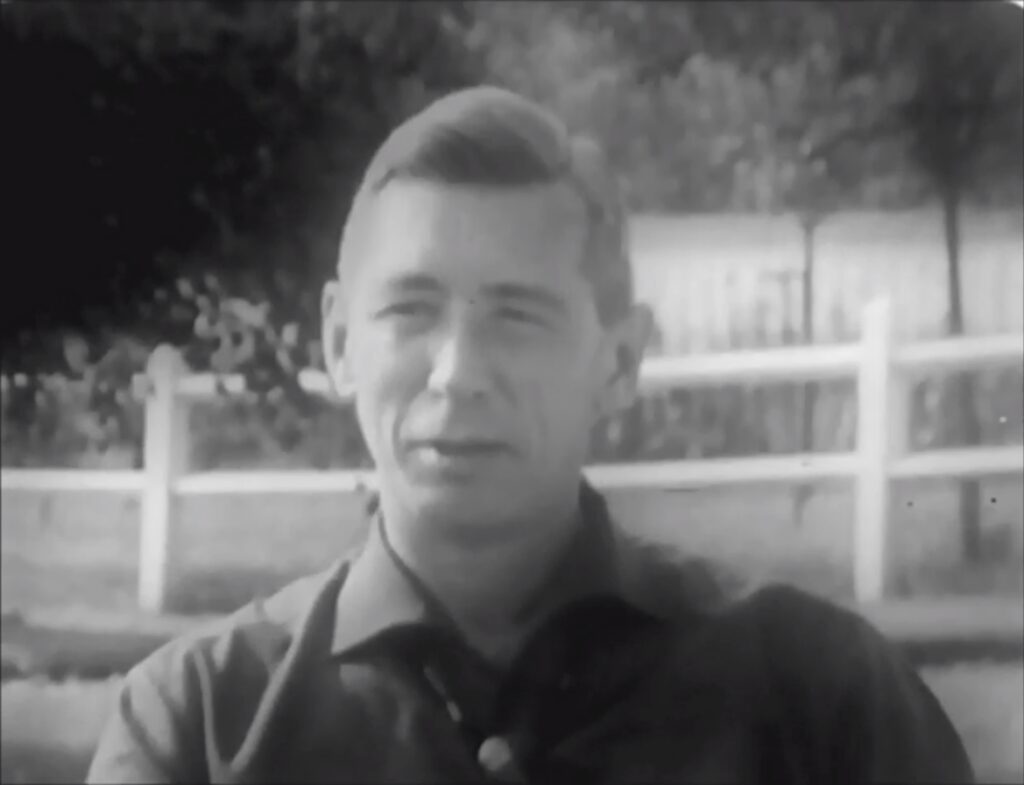
The Adventures of Tintin may be a children’s comic series from mid-twentieth-century Europe, but its appeal has long since transcended the boundaries of form, culture, and generation. In fact, many if not most seriously dedicated fans of Tintin are in middle age and beyond, and few of them can have avoided ever considering the question of his creator’s activities during the Second World War. Georges Remi, known by the nom de plume Hergé, was born to a lower-middle-class family in a Brussels suburb in 1907: utterly mundane beginnings, perhaps, but ones that would lead to what the apocryphal ancient Chinese curse calls interesting times, even for a young man whose interests didn’t run far past scouting and drawing.
After serving in the Belgian army, explains history YouTuber Mark Felton in his new video above, Remi was hired by the conservative Catholic paper Le Vingtième Siècle to draw comics for its children’s supplement Le Petit Vingtième. It was there that he became Hergé and created the boy reporter Tintin, whom the paper’s editor asked to be sent to a fictionalized Soviet Union in order to expose the evils of the Bolsheviks. Popularity came immediately, and built up to the degree that an actor was hired to put his hair into a quiff and “return” by train to an appreciative crowd in Brussels upon the story’s conclusion. There followed the further adventures of Tintin in the Congo (at the time, a Belgian colony) and Tintin in America, both of which have since come in for a great deal of criticism for their reliance on stereotypes.
Though very much his own artist, Hergé at this stage let the politics of Tintin stories be dictated by higher-ups. Conceived in response to Japan’s invasion of Manchuria, The Blue Lotus, from 1934, did offer him an opportunity to increase the realism of his art, rendering the look and feel of China as accurately as his research could make possible; he continued to incorporate large amounts of detail from all over the world into The Broken Ear, The Black Island, and King Ottokar’s Sceptre. Though that last deals with fictional European countries, it also clearly satirizes the invasive tendencies of Hitler’s Germany — which would come for Hergé’s homeland in 1940, shutting down Le Petit Vingtième, putting him out of a job, and even requisitioning his home.
Eventually, Hergé landed on his feet and joined Le Soir, Belgium’s largest French-language newspaper. Though he could publish Tintin there, the Nazis had turned it into their ideological mouthpiece, a fact that didn’t reflect well on Hergé after the Allied victory. He found himself blacklisted and categorized with the thousands of Belgian collaborators who could receive the death penalty or life in prison, but an investigation into his case found him to be “a blunderer rather than a traitor” — shades of P. G. Wodehouse making broadcasts about the lighter side of internment for the Gestapo. His good standing as a citizen and artist was eventually restored, though even today, his wartime activities are occasionally called into question. Still, he was able to continue Tintin’s adventures until he died in 1983, engaging in only the kind of collaboration he could do with his staff at Studios Hergé.
Related Content:
Hergé Draws Tintin in Vintage Footage (and What Explains the Character’s Enduring Appeal)
How Andy Warhol and Tintin Creator Hergé Mutually Admired and Influenced One Another
Comics Inspired by Waiting for Godot, Featuring Tintin, Roz Chast, and Beavis & Butthead
How the Nazis Waged War on Modern Art: Inside the “Degenerate Art” Exhibition of 1937
The Nazis’ 10 Control-Freak Rules for Jazz Performers: A Strange List from World War II
Based in Seoul, Colin Marshall writes and broadcasts on cities, language, and culture. His projects include the Substack newsletter Books on Cities and the book The Stateless City: a Walk through 21st-Century Los Angeles. Follow him on the social network formerly known as Twitter at @colinmarshall.





Leave a Reply