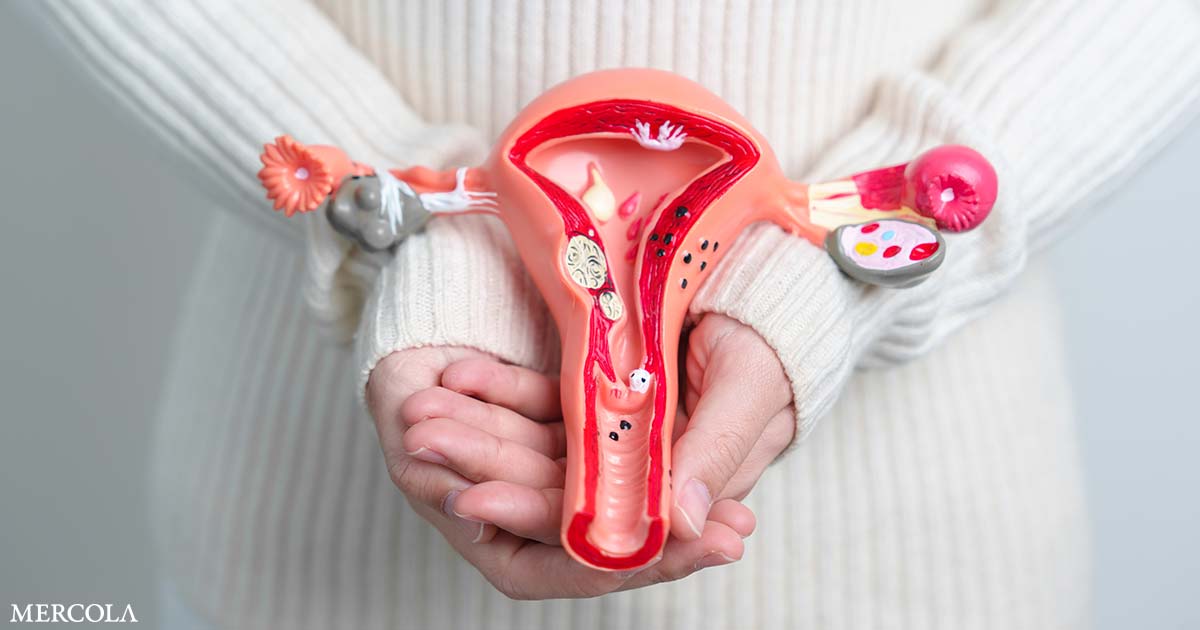
Hysterectomy is among the commonest surgical procedures for girls in the US. The process includes eradicating the uterus, which suggests no extra durations and no chance of being pregnant. About 600,000 hysterectomies are finished every year, and by the point a girl reaches 60, there’s a one in three likelihood she’s had one.1
Initially, hysterectomy was developed to deal with gynecologic cancers. At this time, its use extends past malignancies to deal with different debilitating gynecological circumstances, similar to power pelvic ache, fibroids, endometriosis, heavy menstrual bleeding, and uterine prolapse. Many ladies endure the process properly earlier than menopause, generally of their 30s or 40s.2
In some instances, each ovaries are eliminated on the similar time, a process known as bilateral oophorectomy.3 Whereas the surgical procedure may carry actual reduction, particularly if signs are extreme, it additionally raises essential questions on what occurs when reproductive organs are eliminated earlier than the physique’s able to shut them down by itself.
Findings from the long-running Nurses’ Well being Research make clear these penalties, revealing a powerful hyperlink between hysterectomy and elevated cardiovascular danger. The info have prompted consultants to take a more in-depth have a look at how and when the process is advisable, significantly for young women.4
Youthful Age at Hysterectomy Raises Cardiovascular Threat, Even with Estrogen Use
The featured examine, printed in Obstetrics & Gynecology,5 analyzed information from practically 240,000 girls, dividing them into three principal teams — those that had no surgical procedure, those that had a hysterectomy alone, and those that had a hysterectomy with bilateral oophorectomy. Every group was additional cut up by whether or not they used estrogen afterward, to judge how hormone remedy may affect long-term outcomes.
• Getting hysterectomies at a youthful age will increase the chance — The researchers noticed that ladies who underwent hysterectomy earlier than age 50 had been extra prone to expertise main cardiovascular occasions, similar to coronary heart assault, stroke, or bypass surgical procedure, in comparison with girls who didn’t have the surgical procedure. Girls who had a hysterectomy earlier than age 46 and didn’t use estrogen had a 21% larger danger of heart problems (CVD) in comparison with these with no surgical procedure.
• Estrogen use would not totally offset surgical results — Girls who endure ovary removing or early hysterectomy are sometimes prescribed estrogen to compensate for the sudden drop in hormone manufacturing. It’s believed to ease menopausal signs and decrease a few of the well being dangers linked to hormone loss.
Nevertheless, the examine revealed that even amongst girls who used estrogen after hysterectomy and oophorectomy, these below age 46 nonetheless had a 26% elevated danger, and people between 46 and 50 confronted a barely decrease however nonetheless elevated danger. The researchers wrote:
“Youthful age at time of hysterectomy, with or with out oophorectomy, is related to larger danger of CVD. Notably, use of estrogen doesn’t seem to mitigate deleterious results of hysterectomy with oophorectomy earlier than age 50 years.”6
• The chance extends throughout completely different age teams — Amongst girls who didn’t use estrogen and underwent each surgical procedures, cardiovascular danger was elevated in any respect ages besides in these over 60. Most on this older group had been already postmenopausal, which seemingly explains the distinction. These findings recommend an important window throughout midlife when the physique is very delicate to hormonal disruption.
• The sample factors to extra than simply estrogen loss — Whereas estrogen deficiency has typically been blamed for cardiovascular decline after pure or surgical menopause, this examine challenges that view. Different pathways, together with shifts in hormone ratios, metabolic signaling, and inflammatory responses, could also be at play.
Whereas hysterectomy stays an essential choice for treating extreme gynecologic circumstances, this examine emphasizes the necessity for cautious, individualized decision-making round these surgical procedures in youthful girls.
Earlier Korean Examine Helps the Hyperlink Between the Uterus Removing and CVD
A 2023 examine printed in JAMA Community Open reinforces the hyperlink between early hysterectomy and elevated cardiovascular danger. This huge-scale, population-based cohort examine from South Korea additionally got down to study the long-term cardiovascular dangers of hysterectomy by monitoring girls aged 40 to 49 who underwent reproductive surgical procedure earlier than pure menopause.7
• Early hysterectomy was linked to a better danger of significant cardiovascular occasions — In a cohort of over 135,000 girls adopted for practically eight years, those that had a hysterectomy earlier than age 50 had been extra prone to expertise main cardiovascular occasions, together with stroke. The incidence charge was 115 per 100,000 person-years within the hysterectomy group, in comparison with 96 within the management group.
After adjusting for confounding components, hysterectomy was linked to a 25% elevated danger of general CVD. “These findings recommend that the uterus might have a cardiovascular protecting impact in girls, impartial of feminine intercourse hormones,” the authors famous.
• Stroke emerged as probably the most persistently elevated danger — Even minimally invasive procedures like laparoscopic hysterectomy had been related to a 32% elevated danger of stroke in comparison with those that didn’t endure surgical procedure. The consistency of this discovering throughout surgical approaches signifies that merely eradicating the uterus, no matter approach, is sufficient to set off vascular modifications.
• Elevated danger endured regardless of controlling for different components — The elevated stroke danger remained important even after adjusting for widespread cardiovascular danger variables, together with hypertension, diabetes, ldl cholesterol, and hormone remedy. This reinforces the concept hysterectomy itself might instantly affect cardiovascular physiology, relatively than simply amplifying present well being points.
• Mechanisms contain disrupted ovarian signaling and modifications in blood viscosity — The examine outlined two principal pathways which will clarify the elevated cardiovascular danger, even when the ovaries are left in place:
“It has been beforehand proposed that one of many doable mechanisms is disruption of ovarian blood circulate from ovarian ligaments throughout hysterectomy, which can end in untimely ovarian failure. Decreased ovarian blood circulate and low ovarian intercourse steroid ranges have been famous after hysterectomy.
… One other doable mechanism is that the lack of menstruation after hysterectomy might end in a hemorheologic deleterious impact. After menopause, a rise in hematocrit ranges happens.
Elevated hematocrit ranges are related to elevated blood viscosity, resulting in endothelial harm, rupture of plaques by rising shear stress on the vessel wall, and thrombus formation by purple blood cell aggregation, thereby rising the chance of hostile cardiovascular occasions.”8
Preserving the Ovaries Doesn’t Forestall the Results of Early Hysterectomy
One other earlier examine from the Mayo Clinic, printed in Menopause,9 reinforces the affiliation between hysterectomy and long-term cardiovascular danger. Not like earlier analysis that examined the mixed removing of the uterus and ovaries, this examine centered particularly on girls who retained their ovaries. Regardless of ovarian conservation, the findings confirmed that hysterectomy alone was nonetheless linked to an elevated danger of cardiovascular and metabolic illness over time.
• Hysterectomy with out oophorectomy nonetheless led to elevated well being dangers — The examine adopted greater than 2,094 girls in Minnesota who had hysterectomies for benign circumstances between 1980 and 2002. In response to a Mayo Clinic information launch:10
“They discovered that ladies present process hysterectomy with ovarian conservation had been extra prone to develop hyperlipidemia, hypertension, weight problems, cardiac arrhythmias and coronary artery illness.
Most putting, researchers discovered that ladies who underwent hysterectomy with ovarian conservation at or earlier than age 35 had an elevated danger of congestive coronary heart failure (4.6-fold improve) and coronary artery illness (2.5-fold improve).”
Dr. Shannon Okay. Laughlin-Tommaso, the examine’s lead creator, additionally added that ladies between the ages 36 and 50 who had a hysterectomy with their ovaries preserved confirmed a 1.3-fold elevated danger of coronary artery illness, which is an estimated 6% improve in absolute danger.
• The divergence in cardiovascular well being didn’t emerge instantly — As an alternative, variations grew to become clear 20 to 25 years post-surgery, which is across the time most girls would naturally attain menopause. This means that hysterectomy might set off a slow-moving shift within the physique’s regulatory techniques, altering the trajectory of getting older and illness.
• Ovarian preservation didn’t stop hormonal disruption — In response to Dr. Laughlin-Tommaso, “One principle is that the lack of collateral blood circulate to the ovaries attributable to a hysterectomy ends in decreased ovarian reserve and its sequelae. Or the uterus itself might have a direct, unknown impact on the ovaries.”
• Late-onset results underscore the necessity for long-term perspective — As a result of CVD typically develops step by step, the examine’s lengthy follow-up interval was important in capturing danger that shorter research might have missed. Its findings spotlight how surgical choices made in a single’s 30s or 40s have ripple results a long time later, altering how and when age-related ailments emerge.
Whereas the authors of this examine ultimately advisable hormonal therapy to be supplied or thought of for girls who have to endure a hysterectomy, more moderen research present this technique doesn’t mitigate the consequences.
When you’ve learn my earlier articles on estrogen, I additionally don’t totally agree that deficiency is the central driver of those outcomes. As I’ll clarify beneath, I imagine the extra related problem lies in how endocrine signaling turns into dysregulated, not depleted, after the cessation of menstruation.
The Hidden Position of Estrogen Imbalance After Hysterectomy
Medical pointers have lengthy handled estrogen loss because the central concern following pure menopause or surgical procedures that have an effect on reproductive hormone regulation. This assumption has formed hormone remedy pointers for many years and nonetheless influences therapy choices immediately. However rising proof exhibits that the true drawback isn’t simply how a lot estrogen is misplaced — it’s the imbalance that happens when hormones like progesterone and androgens decline much more.
• In girls who’ve undergone hysterectomy, hormonal imbalance typically begins with disrupted ovulation — Even when the ovaries are left intact, eradicating the uterus can alter ovarian blood circulate and hormonal signaling, resulting in much less constant ovulation or earlier ovarian decline. Since progesterone is produced solely after ovulation, its ranges fall first.11 This creates a state of estrogen dominance as progesterone wanes.
• Unopposed estrogen disrupts tissue perform and power metabolism — Estrogen performs important roles within the physique, however with out progesterone to reasonable its results, it alters cell conduct. It raises intracellular calcium, impairs mitochondria, and will increase receptor sensitivity, which promotes oxidative stress, reduces metabolic flexibility, and strains cardiovascular perform.
• Hormone ratios are key to understanding danger — A 2024 examine in The Journal of Medical Endocrinology & Metabolism discovered that ladies utilizing estrogen-based hormone alternative remedy (HRT) had:12
◦ Fourfold to sevenfold larger concentrations of estrone and estradiol in each subcutaneous and visceral fats in comparison with non-users.
◦ About 30% decrease testosterone ranges in visceral fats, regardless of related complete serum testosterone throughout teams.
◦ Decrease ranges of free (bioavailable) testosterone in blood in comparison with girls not on HRT.
◦ Estrogen-to-androgen ratios that had been 9 to 12 occasions larger in subcutaneous fats and 4 to 6 occasions larger in visceral fats.
• Fats tissue reveals a hidden layer of estrogen dominance — These findings recommend that estrogen-based HRT would not simply elevate estrogen ranges general but additionally creates a powerful estrogen-dominant atmosphere particularly inside fats tissue. This shift is very pronounced in each subcutaneous and visceral fats and isn’t at all times seen by customary blood checks.
That issues as a result of fats tissue performs an energetic function in regulating irritation, insulin sensitivity, and blood vessel perform. When estrogen overwhelms androgens domestically, it alters how fats behaves in ways in which have an effect on metabolism and cardiovascular well being. In different phrases, hormone steadiness inside fats, not simply in blood, could possibly be a key think about understanding the long-term dangers and advantages of HRT.
• Estrogen dominance happens even with out hormone remedy — Georgi Dinkov, a revered professional in metabolic well being, supplied commentary on the Journal of Medical Endocrinology & Metabolism examine. He famous that your progesterone-to-estrogen ratio ought to fall between 200 and 500 for optimum hormonal steadiness. Something beneath 100 is taken into account estrogen-dominant.
But within the non-HRT group, Dinkov calculated strikingly low ratios — 16 in blood serum, 20 in subcutaneous fats, and 38 in visceral fats, that are all properly throughout the vary of estrogen dominance. He factors out that if these numbers had been present in premenopausal girls, they might clearly point out endocrine imbalance and warrant medical intervention.13
These recommend that hormonal imbalance after hysterectomy or menopause might already be current earlier than any therapy begins. Including extra estrogen by HRT might not restore steadiness, however as an alternative deepen the mismatch. For ladies who’ve undergone hysterectomy, significantly at youthful ages, this may occasionally assist clarify why estrogen remedy doesn’t totally defend towards CVD and may even reinforce the underlying physiological stress.
For a deeper have a look at how hormonal imbalances linked to the cessation of menstruation influence general well being, see the article “Menopause and the Affect of Estrogen Dominance.”
Taking Management of Your Estrogen Steadiness Submit-Hysterectomy
Managing hormonal well being after hysterectomy, particularly when the process happens earlier than pure menopause, includes greater than changing hormones which are assumed to be misplaced. What issues extra is how the endocrine system recalibrates within the absence of uterine-ovarian signaling and menstrual biking.
The excellent news is that you’ve got significant management over this hormonal panorama. Most of the most impactful modifications come from day-to-day choices, not prescriptions. The steps beneath assist hormone steadiness naturally and assist scale back the consequences of unopposed estrogen.
1. Know your prolactin degree — Many individuals assume they’re low in estrogen based mostly on blood checks, when in actuality, estrogen ranges could be excessive inside tissues and organs. That’s as a result of serum measurements don’t mirror how a lot estrogen is saved or energetic on the tissue degree. Estrogen might seem low in plasma however nonetheless be elevated in fats, liver, or different websites. Prolactin serves as a extra dependable marker of estrogen exercise.
Estrogen stimulates the pituitary gland to launch prolactin, so elevated prolactin ranges typically point out heightened estrogen receptor activation, whether or not from inside hormone manufacturing or exterior publicity to endocrine-disrupting chemical substances (EDCs) present in plastics, cosmetics, and different pollution. This turns into particularly significant when paired with low thyroid perform, making prolactin a precious sign of broader hormonal imbalance.
2. Get rid of vegetable oils in your eating regimen — Seed oils are excessive in linoleic acid (LA) and different polyunsaturated fatty acids (PUFAs), which mimic estrogen and disrupt mitochondrial perform. These oils are prevalent in processed meals and restaurant meals. Purpose to maintain your LA consumption beneath 5 grams per day — 2 grams or much less is even higher.
To watch your consumption, use an internet diet tracker like my upcoming Well being Coach app, which launches in early July. It options Seed Oil Sleuths™, a built-in software that scans restaurant menus and grocery objects, calculates your every day seed oil publicity to the closest tenth of a gram, and helps you keep on monitor effortlessly. Scan the QR code beneath to hitch the early-access listing and be first in line for smarter, cleaner consuming.

3. Turn into a acutely aware client of on a regular basis merchandise — Almost 1,000 on a regular basis objects are laced with estrogen-mimicking compounds, together with xenoestrogens. These endocrine disruptors are present in microplastics, private care merchandise, and customary family cleaners.
To decrease your publicity, go for pure or natural private care objects and test labels for elements like parabens and phthalates. Substitute standard cleaners with easy, unhazardous choices similar to vinegar, baking soda, and important oils.
Importantly, scale back your reliance on plastic, particularly for meals and drinks. Select glass or chrome steel, and don’t warmth meals in plastic containers; warmth accelerates chemical leaching. Filter your faucet water to take away microplastics. When you use bottled water, go for glass. For laborious faucet water, boiling it for 5 minutes considerably cuts down microplastic ranges.
4. Rethink estrogen-based therapies and contraceptives — Take a more in-depth have a look at your use of estrogen-containing HRT or contraception drugs, as they contribute to estrogen dominance. Take into account options that assist your physique’s pure hormonal steadiness. Even bioidentical estrogen, regardless of being labeled “pure,” nonetheless provides to your general estrogen load.
5. Take into account pure progesterone to counter estrogen — For these reaching perimenopause and menopause, whether or not naturally or on account of hysterectomy, pure progesterone is a very useful consideration. Progesterone acts as a pure antagonist to estrogen, serving to to steadiness its results. Given the tendency towards estrogen dominance, incorporating pure progesterone helps restore a extra balanced hormonal ratio.
For extra recommendations on supporting hormonal steadiness, take a look at “Unlocking the Secrets and techniques of Hormone Well being and Vitality.”
Incessantly Requested Questions (FAQs) About Early Hysterectomy
Q: Does having a hysterectomy improve the chance of coronary heart illness?
A: Sure. A number of long-term research, such because the analysis printed in Obstetrics & Gynecology, present a transparent hyperlink between hysterectomy, particularly when carried out earlier than age 50, and elevated heart problems (CVD) danger. The chance is even larger when the ovaries are additionally eliminated.
Q: Does hysterectomy trigger early menopause?
A: If the ovaries are eliminated, menopause begins instantly. However even with ovarian conservation, many ladies expertise earlier ovarian decline after hysterectomy on account of disrupted blood circulate or hormonal signaling. This will result in signs and dangers just like untimely menopause.
Q: Does estrogen remedy stop coronary heart illness after hysterectomy?
A: Not totally. Whereas estrogen remedy might assist scale back menopausal signs and a few short-term dangers, current research present it doesn’t fully offset the long-term cardiovascular results of early hysterectomy.
Q: Why does estrogen dominance matter after hysterectomy?
A: If the ovaries are eliminated throughout hysterectomy, estrogen and progesterone ranges drop sharply. If the ovaries are preserved, each hormones sometimes proceed to be produced so long as ovulation continues. Nevertheless, some research recommend that hysterectomy impairs ovarian blood circulate or accelerates ovarian getting older, which might ultimately scale back hormone output prior to anticipated.
In girls who cease ovulating, whether or not on account of menopause or surgical results, progesterone manufacturing falls, leaving estrogen unopposed. This unopposed estrogen exercise, particularly when amplified by estrogen made in fats tissue, might contribute to elevated dangers of heart problems, metabolic dysfunction, and estrogen-sensitive circumstances. These dangers could also be larger when hysterectomy is completed earlier than pure menopause.
Q: What can I do after a hysterectomy to guard my coronary heart well being?
A: Give attention to restoring hormonal steadiness and supporting metabolic well being. This contains optimizing endocrine perform, lowering estrogen-mimicking exposures, supporting mitochondrial resilience by diet, and contemplating pure progesterone supplementation.






Leave a Reply